



My first peekaboo hair color was technically hidden so well that nobody could see it.
Peekaboo hair color ideas is one of the easiest ways to add something playful to your look without committing to a full-head color change. The hidden sections can stay subtle during everyday styling and become more visible when you move, curl, braid, or tie your hair up.
I had gone into the appointment with a folder full of pictures showing dark hair falling over flashes of vivid violet. In every photo, the color appeared only when the person tucked their hair behind an ear or moved the top layers. That was exactly what I wanted: normal-looking dark hair most of the time, then an unexpected streak of color when it moved.
The stylist placed the violet underneath my hair, I watched the foils come out, and the color itself looked beautiful.
Then she dried my hair.
Nothing.
I shook my head, moved the front sections and tied my hair into a loose ponytail. I could find a thin purple line if I deliberately separated the layers with my fingers, but the effortless flash of color I had imagined simply was not there.
The problem was not the purple. We had treated peekaboo color as a shade decision when it was really a placement decision.
That appointment changed how I think about hidden hair color. The prettiest color in the world will not create the effect you want if it is placed where your haircut, density and normal styling never reveal it.
I Chose the Color Before I Chose the Reveal
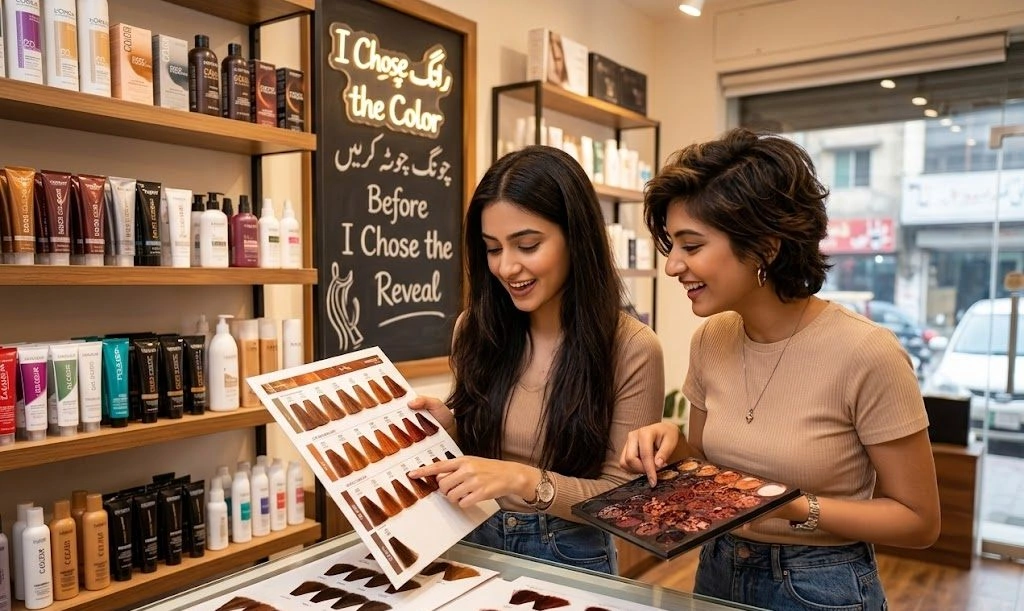
I had spent far too much time deciding between violet and blue.
I had spent almost no time thinking about when I wanted the color to appear.
That question turned out to matter more.
A low nape section behaves differently from color placed directly behind the ears. A narrow underlayer near the temples can flash when hair is tucked back. A broader panel beneath the crown becomes much more obvious when the hair moves. Hidden color underneath a blunt bob can behave completely differently from the same placement inside long, heavily layered hair.
My first placement sat too low and too deep beneath dense hair. Because I normally wore my hair down with very little movement, the violet remained covered.
The next time, I asked for smaller panels closer to the sides of my head. I could still hide them by wearing my hair normally, but a ponytail, half-up style or simple ear tuck exposed enough color to make the technique worthwhile.
That was the moment peekaboo color finally made sense to me. It was not simply “bright hair underneath.” It was controlled visibility.
The Best Peekaboo Hair Color Ideas Started With My Natural Base
Once I understood placement, choosing color became easier.
On very dark hair, saturated jewel tones created the contrast I originally wanted. Violet, cobalt blue, emerald, deep cherry and magenta could produce a dramatic reveal, although obtaining a bright version of those colors might require lightening the selected hair first.
On brown hair, I found that copper, burgundy, rose, caramel and warmer reds could look noticeable without creating quite such a sharp division between the natural hair and the hidden panel.
Blonde hair gave me a different set of possibilities. Pastel pink, lilac, peach and soft blue could remain visible without the same amount of preliminary lightening, depending on the starting shade and desired result.
I eventually became less interested in selecting the most unusual color and more interested in selecting one that made sense against the starting base.
That mattered because achieving a much lighter canvas can affect hair condition. The American Academy of Dermatology notes in its guidance on coloring hair while reducing damage that lightening hair more than three shades generally requires stronger peroxide concentrations and can cause more damage.
Peekaboo placement reduced how much hair I needed to lighten, but it did not make the lightened sections immune to damage.
I Learned That Blonde Peekaboo Panels Were Not the Only Option
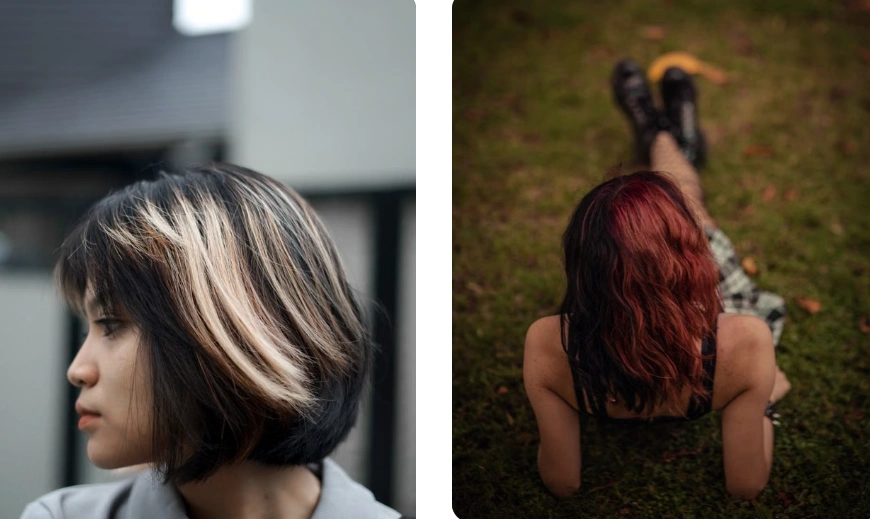
My original inspiration photographs all showed nearly platinum sections covered with vivid fashion color.
I assumed that was the formula.
It is one option, not the definition of the technique.
Later, I saw much more wearable versions built around chocolate hair with cinnamon panels, black hair with burgundy underneath, medium brown hair with caramel flashes and blonde hair with deeper brown sections.
The contrast did not always need to come from an electric color.
A reverse peekaboo effect, where darker sections sit beneath lighter hair, could provide the same sense of movement without maintaining pink, blue or purple pigment.
That became useful when I wanted something interesting but did not want every shampoo to feel like a battle against fading.
The FDA notes that unusual shades such as pink, orange, blue and green are not placed into a separate regulatory category merely because the colors are unconventional. Its information on hair dyes and unusual colors explains that regulation depends on the type of dye and ingredients rather than whether the finished shade looks traditional.
The fact that a color looked playful did not make the chemistry around using it irrelevant.
My Haircut Decided How Much Color I Needed
My hair was relatively dense, which was why the first narrow nape panel disappeared.
Someone with finer hair might get a noticeable result from a much smaller section. Heavily layered hair can expose hidden color every time the ends move. A blunt cut may reveal the color primarily at the perimeter or when the hair is lifted.
This is why I stopped taking one inspiration photograph into an appointment and saying, “I want exactly this.”
I started looking at the model’s haircut too.
If their hair was half my density and contained significantly more layers, copying the same foil placement was unlikely to produce the same visible result.
For a subtle version, I liked small sections behind the ears. They appeared when I tucked my hair back but disappeared easily.
For more impact, an underlayer running around part of the lower head created a stronger reveal in ponytails and half-up styles.
For something between those two, a few deliberately spaced internal panels created flashes rather than one solid block.
Those distinctions helped me communicate what I wanted far more clearly than saying I wanted “subtle peekaboo hair.”
The Strand Test Would Have Saved My First Bright Color
My violet looked beautiful immediately after the appointment.
A few washes later, the tone changed faster than I expected.
I had assumed the inspiration photograph represented how the color would look for most of its lifespan. In reality, temporary and semi-permanent fashion colors can change noticeably as they fade, and the underlying lightened hair begins influencing what I see.
A strand test gives useful information about more than whether the product physically colors the hair. It can show how a particular section responds, how light the base becomes and whether the finished shade resembles the target.
The NHS recommends following product instructions and performing appropriate testing before coloring. Its guidance on hair dye reactions and strand testing also notes that permanent and some semi-permanent dyes can contain PPD, an ingredient capable of causing irritation or allergic reactions in some people.
That made me stop assuming that a product I had used previously would always be uneventful.
I Stopped Treating Burning as Part of Hair Coloring
One of the worst beauty ideas I absorbed when I was younger was that tingling meant color was working.
It does not need to.
The FDA advises following package warnings, performing the recommended skin test before dyeing and not leaving color on longer than instructed. Its hair-dye safety guidance also specifically warns against mixing different hair-dye products and recommends rinsing the scalp thoroughly after coloring.
That matters even with peekaboo hair because “only coloring a small section” can create false confidence. The scalp and surrounding skin can still come into contact with the product.
The AAD explains that an itchy scalp accompanied by a rash after hair coloring can be a sign of allergic contact dermatitis. Its discussion of hair dye as a possible cause of an itchy scalp identifies PPD as one possible trigger.
When redness, swelling, persistent itching or another reaction appears, I no longer interpret it as normal processing discomfort.
I Needed to Decide How Much Maintenance I Actually Wanted
The photographs that convinced me to get peekaboo hair had all been taken shortly after coloring.
Nobody showed me week six.
That was when my purple became softer, the lightened base became more obvious and the roots began changing the placement.
Interestingly, hidden color made some of that easier to tolerate. Because the section was underneath, root growth did not dominate my entire appearance in the way an all-over bright shade might.
Still, the color required decisions.
Did I want to refresh the vivid pigment frequently? Was I comfortable allowing it to fade into a softer shade? Would the underlying lightened hair bother me once most of the fashion color disappeared?
The answers affected which color made sense.
Someone who enjoys frequent color changes may appreciate pink, violet or blue panels that evolve over time. Someone who wants lower visual maintenance may be happier with caramel, copper, burgundy or another tone closer to the natural base.
This was where 1.Anchor became useful in the way I evaluated the decision. I stopped comparing only the freshly colored result and started considering the bleaching required, upkeep, appointment frequency and how attractive the color would remain while fading.
The Hidden Placement Did Not Protect My Hair From Damage
Another mistake I made was thinking, “It is only underneath.”
Visually, yes.
Structurally, lightened hair is still lightened hair.
The pieces beneath my top layer became noticeably drier than the untreated sections. I had to handle them more carefully rather than assuming nobody seeing the damage meant the damage did not matter.
The AAD advises protecting colored and bleached hair from excessive sun exposure because treated hair can become dry, rough, faded and brittle more easily. Its dermatologist guidance for color-treated hair changed the way I treated the hidden panels between appointments.
I became more conservative about stacking chemical services close together too.
Current FDA hair-dye safety recommendations advise not coloring hair when the scalp is irritated or damaged and provide specific precautions around bleaching, relaxing, perming and subsequent dye use.
Peekaboo color can limit the amount of hair being processed. It does not make over-processing impossible.
Product Labels Became More Important Than Color Names
I used to shop by shade.
Electric Violet sounded exciting. Midnight Berry sounded sophisticated. Cherry Cola sounded wearable.
None of those names told me everything I needed to know about what was actually in the product.
The FDA’s cosmetic labeling requirements explain the information cosmetic products sold in the United States are expected to carry and why misleading labeling can create regulatory problems.
I started checking ingredient information and manufacturer instructions rather than assuming two products with similar front-of-box colors behaved the same way.
This became especially important after learning more about allergic contact reactions. The FDA’s broader guidance on allergens in cosmetic products explains that professional patch testing may sometimes be used to identify the ingredient responsible when a person develops dermatitis.
Repeated reactions are not something I would try to solve by simply changing from one attractive dye shade to another.
I Became More Skeptical of Hair-Dye Scare Stories Too
Once I started reading about ingredients, I went too far in the opposite direction.
I found alarming claims online suggesting that using ordinary hair dye automatically meant creating a major long-term health risk.
The evidence is more complicated.
The National Cancer Institute’s review of hair products and cancer risk describes mixed findings across different cancers, dye types, time periods and patterns of exposure. Personal hair-dye use overall has not produced the kind of simple yes-or-no conclusion implied by many social posts.
That taught me to apply the same skepticism to frightening claims that I applied to miraculous ones.
Following directions, paying attention to reactions and understanding what I am putting on my hair is more useful than assuming every product is either completely harmless or automatically dangerous.
What Finally Made Peekaboo Hair Work for Me
The successful version was much smaller than the transformation I had originally imagined.
I kept most of my natural dark hair untouched. Two internal sections behind my ears were lightened and colored a rich violet-red. With my hair down, only a tiny amount appeared when I moved.
When I tucked both sides back, the color became obvious.
When I wore a ponytail, it looked intentional.
When it faded, it still blended reasonably well with the rest of my hair instead of turning the entire style into a maintenance emergency.
That was exactly what I had wanted during my first appointment. I simply had not known how to describe it.
Peekaboo hair color works best for me when the surprise comes from thoughtful placement rather than maximum brightness. The color should appear during the parts of everyday life when I actually want it visible and disappear when I do not.
My first purple panel taught me that hidden color is not really about hiding hair dye.
It is about deciding exactly when I want it to be seen.