



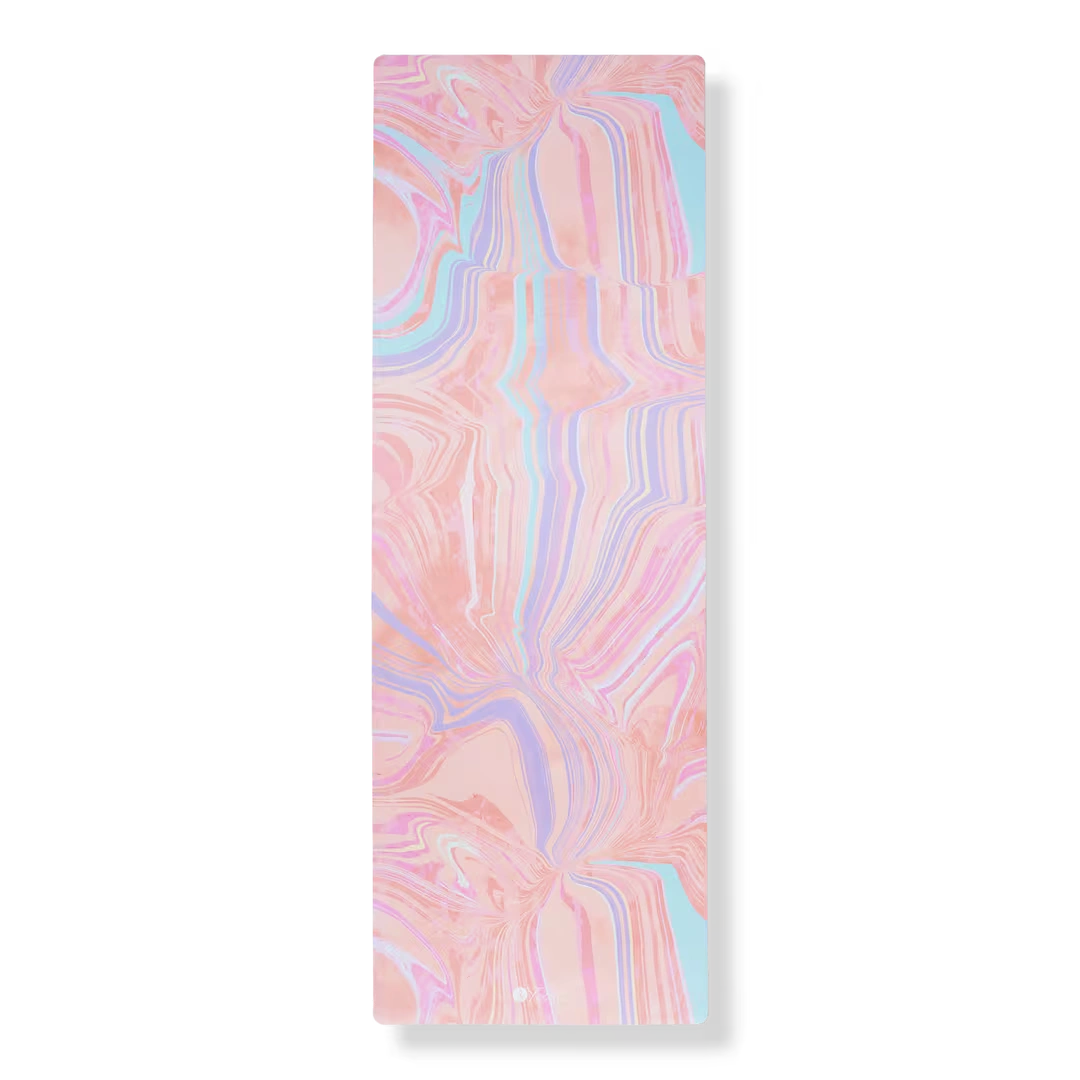
Yoga Design Lab Combo Yoga Mat combines a yoga mat and absorbent yoga towel into one integrated surface, making it particularly suited to hot yoga, power flows, vinyasa, and other practices where perspiration can make an ordinary mat slippery. Its recycled PET microfiber top is bonded to a natural tree-rubber base, and unlike a conventional dry-grip surface, the microfiber is designed to become grippier as moisture increases. The standard Combo Mat is available in 3.5 mm and 5.5 mm thicknesses, with a carrying strap included.
About Combo Yoga Mat
Combo Yoga Mat is built around a simple two-in-one idea. Instead of laying a separate yoga towel over a rubber mat, Yoga Design Lab permanently combines an absorbent microfiber upper layer with the supportive rubber base underneath. This removes the loose towel layer that can bunch, shift, or need repositioning during a session.
The mat measures 70 inches / 178 cm long by 24 inches / 61 cm wide and is offered in 3.5 mm and 5.5 mm versions. Yoga Design Lab currently lists weights of approximately 4.9 lb / 2.2 kg and 7.1 lb / 3.2 kg depending on thickness, so cushioning preference also affects how substantial the mat feels when carried.
Yoga Design Lab states that approximately 19 recycled 600 mL plastic bottles are used in the recycled PET component of one standard Combo Mat. The company also says the construction is free from silicone, phthalates, and toxic glue.
Combo Yoga Mat Features
The defining feature of the Combo Yoga Mat is not simply its printed surface. Its microfiber top is deliberately designed to respond to moisture.
During a sweaty session, moisture increases traction between hands, feet, and the fabric-like surface. That makes the design particularly logical for hot yoga, where a conventional yoga towel might otherwise be placed over the mat.
The natural rubber underneath performs a different job. It gives the mat weight, cushioning, and contact with the floor while the microfiber handles absorption and the moisture-activated surface feel.
Moisture-Activated Microfiber Grip
An important characteristic of this mat is that its grip behaves differently when dry versus damp.
Yoga Design Lab specifically notes that the microfiber can feel slippery when completely dry. The company recommends lightly misting the surface with water before a low-sweat session so the grip activates earlier. Once perspiration reaches the surface during a hotter or more active practice, the material naturally becomes more grippy.
That makes Combo Yoga Mat especially well matched to hot yoga, vigorous vinyasa, and power-based sessions. Someone whose practice is mostly slow, cool, and low-sweat should understand this behavior before expecting the dry surface to feel like a conventional polyurethane or textured rubber mat.
Integrated Yoga Towel Surface
A separate towel can work well during hot yoga, but it introduces another layer that needs to stay aligned with the mat underneath.
Combo Yoga Mat avoids that arrangement because its absorbent microfiber is bonded directly to the rubber substrate. Yoga Design Lab describes the result as an all-in-one mat-and-towel design intended to eliminate towel bunching.
The microfiber texture also creates a softer fabric feel against the hands, feet, knees, and other points of contact than a completely exposed rubber surface.
Whether that feels preferable is personal. Some people like the softer textile texture, while others prefer the immediate dry tack of a conventional yoga mat.
3.5 mm Versus 5.5 mm Thickness
The two thicknesses make the Combo Mat useful for somewhat different preferences.
The 3.5 mm version keeps the body closer to the floor and provides a firmer platform. Yoga Design Lab recommends it for people who prioritize a more grounded sensation and stability during balance-focused practice.
The 5.5 mm version adds more cushioning between the body and floor. The brand specifically suggests the thicker option for people who prefer greater padding around areas such as the knees.
More cushioning is not automatically better. A thicker, softer platform can feel comfortable during kneeling or floor-based poses, while some users prefer a firmer foundation when balancing on one foot.
This makes thickness primarily a comfort and practice-style decision rather than a simple quality difference.
Natural Rubber Base
The majority of the mat is natural rubber. Yoga Design Lab identifies the overall material composition as approximately 80% natural rubber and 20% recycled PET polyester.
Rubber gives the mat enough substance to remain positioned on the floor while also providing the resilient cushioning expected from a yoga mat.
The manufacturer says its natural rubber is sourced from Vietnam and references the Standard Vietnamese Rubber SVR-3L specification for the material.
The natural-rubber construction also has an important allergy consideration.
Natural Rubber And Latex Sensitivity
Yoga Design Lab specifically warns that its natural tree-rubber base cannot be guaranteed latex-free. The microfiber top itself is latex-free, but natural rubber can contain proteins associated with latex reactions.
This is worth checking before purchase if natural rubber latex is a known allergy. The American Academy of Allergy, Asthma & Immunology explains that natural rubber latex contains proteins capable of triggering allergic reactions in susceptible people.
Someone with a significant diagnosed latex allergy should therefore not assume that the fabric upper layer makes the complete mat suitable.
Recycled PET Microfiber Top
The upper layer is made from polyester derived from recycled PET plastic bottles.
Yoga Design Lab says approximately 19 clear 600 mL bottles are used to produce the recycled material associated with one standard Combo Mat. Its patterns are printed with water-based inks rather than conventional solvent-heavy printing systems.
This material choice is particularly functional because PET microfiber can create an absorbent, towel-like surface while also accepting the detailed patterns for which the brand is known.
The sustainability claim is best understood specifically: part of the mat uses recycled PET, while the base is natural rubber. That is more precise than describing the entire finished mat as made from recycled material.
Support For Hot Yoga Sessions
The mat is especially designed around hot practices, where perspiration becomes part of the grip system rather than something that needs to be kept entirely away from the surface.
Yoga Design Lab specifically identifies hot yoga, flow, and vinyasa among its core applications.
The mat itself does not remove the ordinary considerations that come with exercising in a heated environment. The CDC’s heat guidance for athletes notes that physical activity in hot conditions can increase dehydration and heat-illness risk. If someone feels faint or weak during exercise in heat, the CDC recommends stopping activity and moving to a cooler environment.
That makes the microfiber grip useful equipment, but not a substitute for sensible heat management.
Yoga Practice And Movement Safety
A supportive mat can improve the practice surface, but it does not make every posture appropriate for every person.
The National Center for Complementary and Integrative Health states that yoga is generally considered safe for healthy people when practiced appropriately, although strains and sprains can occur. People with health conditions may need modifications or professional guidance.
This is another reason mat thickness should be chosen around comfort and control rather than attempting to use extra cushioning to compensate for uncomfortable technique.
The mat provides a surface. Appropriate movement still depends on the person using it.
A Mat For More Than One Yoga Style
Although hot practice is where the Combo design makes the strongest case, it is not limited to one type of yoga.
The manufacturer also positions it for vinyasa, power yoga, restorative sessions, and general yoga practice.
The experience will differ by session. During a high-sweat flow, the top layer naturally receives the moisture that activates its grip. During restorative or slow practice, there may be very little perspiration, so lightly misting contact areas can make the surface more secure.
The 5.5 mm version may appeal more to people spending significant time in floor-based poses, while the 3.5 mm option provides the firmer contact some users prefer during standing sequences.
Comfort Without Losing The Floor Connection
Yoga mats have to balance cushioning with stability.
A very thin surface can provide direct feedback from the floor but may feel firm under knees or elbows. A thicker mat provides more separation from a hard studio floor but can feel less direct during standing balance work.
Yoga Design Lab explicitly describes its 3.5 mm mat as the more grounded option and its 5.5 mm mat as the more cushioned choice.
Neither thickness is universally preferable. The correct choice depends on where and how the mat is normally used.
Included Carrying Strap
A carrying strap is included with the standard Combo Yoga Mat.
That addition matters more with a natural-rubber mat than it might with an ultralight travel mat because the standard Combo versions are relatively substantial.
The strap keeps the mat rolled for transport and provides a simple way to carry it between home and a studio without needing a separate mat bag.
The 5.5 mm format naturally occupies more space when rolled than a thinner mat, so portability should be considered alongside extra cushioning.
Cleaning The Microfiber Surface
Because the top layer is designed to absorb sweat, regular cleaning matters particularly after hotter sessions.
Yoga Design Lab recommends hand washing with mild, non-abrasive soap or detergent as the preferred care method. The surface can be gently cleaned with a cloth or sponge and then rinsed thoroughly. Excessive scrubbing and harsh chemicals should be avoided because they can affect the material.
The mat can also be machine washed on a gentle cycle, but the manufacturer specifies a washing machine without a central agitator and still considers hand washing the preferred method.
Allowing sweat to remain trapped inside a tightly rolled damp mat is not a good storage approach. The manufacturer recommends letting the mat dry completely before rolling it away.
Drying And Storage
After washing, the Combo Mat should be hung to air dry away from direct sunlight. Yoga Design Lab says direct sun during drying can contribute to fading or material damage.
Once dry, the manufacturer recommends rolling the mat with the patterned microfiber side facing outward. This helps avoid creasing or unnecessary stress on the finished surface.
Storage should be dry and well ventilated. The brand also advises keeping the mat away from heat sources, oily substances, and corrosive chemicals.
These details are especially useful for natural-rubber equipment because prolonged heat and poor storage can affect rubber differently from a simple fabric towel.
Exercise As Part Of A Broader Activity Routine
Yoga can contribute movement, balance, mobility, strength, and relaxation, depending on the style being practiced.
The CDC physical activity guidance emphasizes that regular activity can be accumulated through different forms of movement rather than requiring one specific exercise method.
The American College of Sports Medicine also recognizes yoga among mind-body movement practices that can support areas such as flexibility and strength.
Combo Yoga Mat is therefore best considered equipment that supports a chosen movement practice, not a product that independently creates fitness results.
Who May Appreciate Combo Yoga Mat
Combo Yoga Mat makes the strongest case for someone who regularly notices their hands or feet becoming slippery as a yoga session gets warmer.
Its integrated microfiber means there is no separate towel to align over the mat, while the moisture-activated surface deliberately becomes more useful as perspiration increases.
It may also appeal to someone who prefers a fabric-like top rather than the texture of bare rubber.
The 3.5 mm version is the more natural choice when a firmer connection to the ground and easier portability matter most. The 5.5 mm version makes more sense when additional cushioning is the priority.
Someone who practices almost entirely in cool, dry conditions should remember that the microfiber may require a light mist of water to provide its intended grip. Someone with a natural-rubber latex allergy should also consider a different material.
What Makes Combo Yoga Mat Different
The defining feature of Yoga Design Lab Combo Yoga Mat is the way its materials solve the familiar mat-plus-towel problem.
A recycled PET microfiber layer handles moisture and becomes grippier when damp, while the natural tree-rubber base supplies stability and cushioning. The two layers are bonded together, so a second yoga towel is not required for the mat to perform as designed. The standard 70-by-24-inch format is available in 3.5 mm and 5.5 mm thicknesses, and a carry strap is included.
For Erothots, Combo Yoga Mat is best positioned as a two-in-one natural-rubber yoga mat and recycled microfiber towel surface designed especially for hot, sweaty, and flowing practices, with moisture-activated grip, two cushioning choices, washable construction, and a clear natural-rubber latex consideration.



Reviews
There are no reviews yet.