




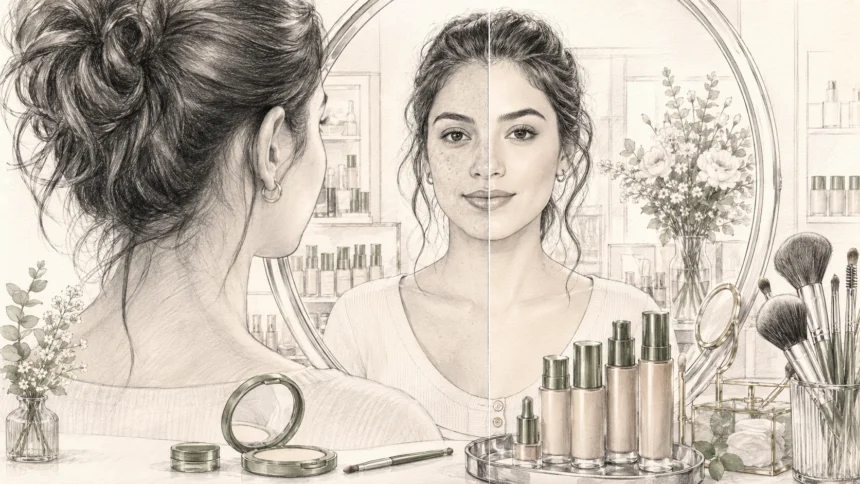
My worst no-makeup makeup look required eleven products.
A no makeup makeup look is about making your skin look fresh and even without covering it under heavy layers. The best approach is to use lightweight complexion products, softly defined brows, a natural flush of colour, and subtle eye and lip products that still look like you.
Under my bedroom light, the result looked polished. At the café, my friend asked why my foundation was gathering around my nose.
The irony was difficult to miss. I had used more makeup to look as though I was wearing less, and every extra layer had made the result more visible.
That failure changed the way I approached natural makeup. The effect did not come from buying products labelled effortless. It came from deciding what I was willing to leave uncovered.
I Had Been Correcting Things Nobody Else Noticed
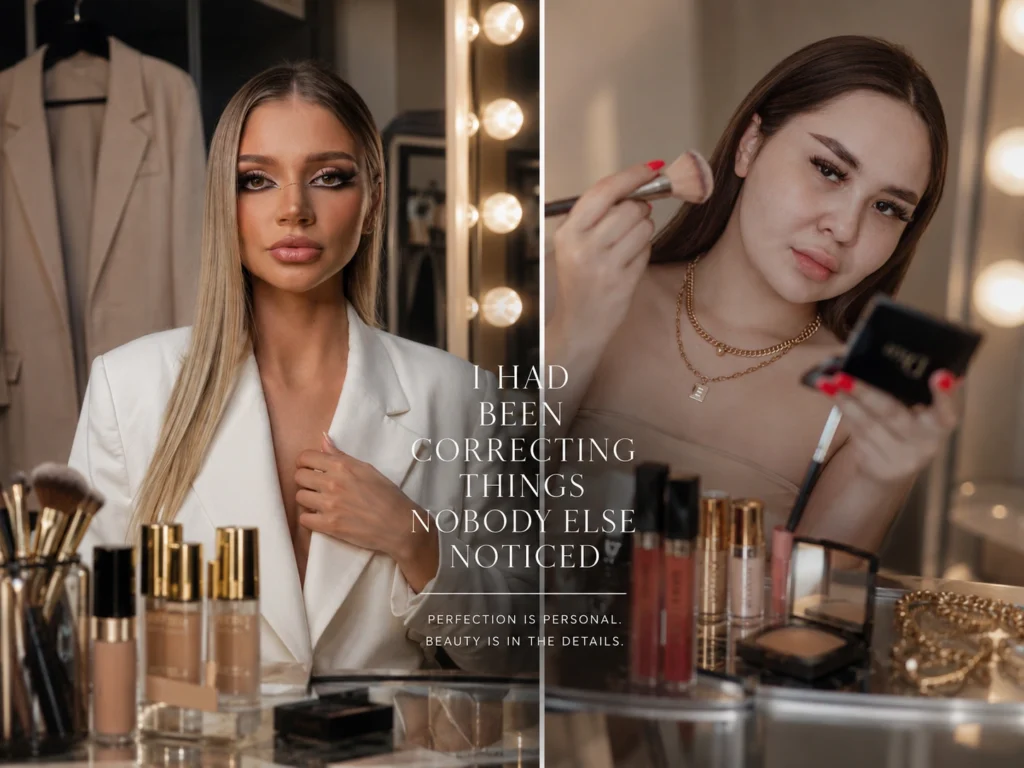
My process began with a close mirror.
At that distance, every pore looked large, every shadow beneath my eyes looked dark and every small patch of redness felt urgent. I corrected each one individually. Then I added colour because the corrections had flattened my face.
By the time I stepped away from the mirror, I had created a full makeup look in beige tones.
The American Academy of Dermatology advises keeping skincare routines simple and choosing products suited to the person’s skin type. Its guidance for healthier-looking skin also recommends removing makeup before bed and treating irritation carefully. The same idea helped my makeup: more steps did not automatically create a more natural result.
I started doing my makeup at normal conversational distance. That single change stopped me from covering marks that were nearly invisible to anyone standing a metre away.
The First Step Became Skin Comfort, Not Primer
I had assumed primer was required because every tutorial included one.
The problem was that my moisturiser, sunscreen, primer and skin tint did not work well together. The layers rolled into small flakes beside my nose and around my eyebrows.
Research into skincare and makeup pilling shows that pilling can be influenced by the interaction of products and the condition of the skin. That supported what I was seeing in the mirror. My problem was not necessarily that I had failed to blend correctly. I had built an unstable stack.
I removed the primer and concentrated on comfortable skin preparation. On dry days, I used moisturiser. On days when my sunscreen was already rich, I used less underneath it.
Cleveland Clinic’s guide to skincare product order places sunscreen at the end of the morning skincare routine and before makeup. It also notes that makeup containing SPF usually does not provide enough protection by itself.
Coverage Worked Better When I Stopped Applying It Everywhere
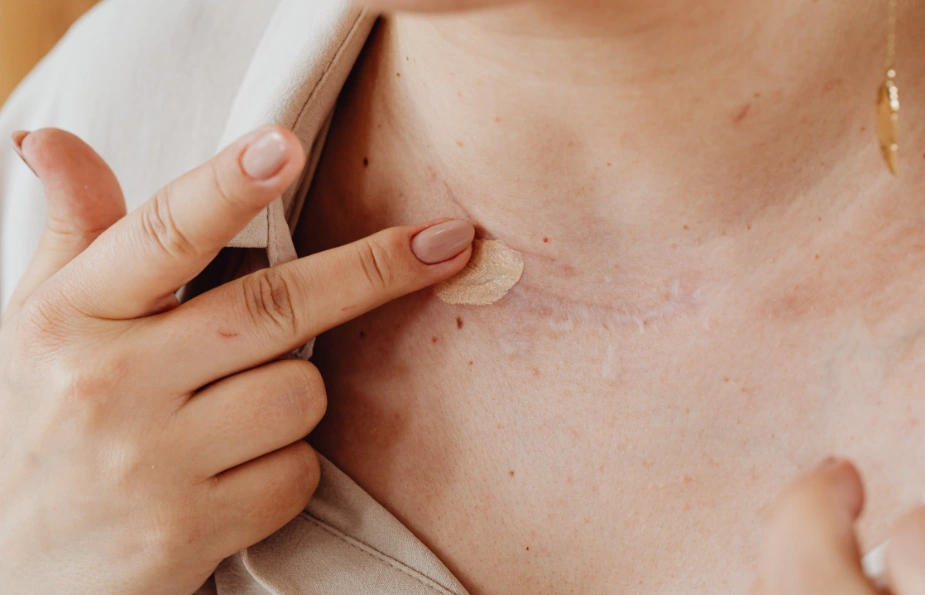
My old routine placed foundation across the whole face, including areas that were already even.
The new version began with small amounts around the nose, centre of the chin and any temporary marks. I blended the edges into bare skin rather than adding another full layer.
That made the makeup harder to identify because there was less of it.
Foundation is legally regulated as a cosmetic in the United States. The FDA’s makeup information explains that colour cosmetics must be safe when used as labelled or customarily used, but most cosmetic formulas do not receive individual premarket approval. This encouraged me to read labels and judge performance instead of assuming that “clean,” “natural” or “skin-loving” language had a fixed regulatory meaning.
For skin prone to clogged pores or rosacea, the AAD suggests considering non-comedogenic makeup and testing products before using them broadly. Its advice for rosacea-prone skin is useful even when the goal is cosmetic rather than medical. Natural-looking makeup fails quickly when the formula creates itching, burning or new bumps.
Concealer Was My Most Overused Product
I had been placing a pale concealer in a large triangle beneath each eye.
That shape brightened the area, but it also created an obvious difference between my under-eyes and the rest of my face. It looked like makeup because the correction was too complete.
I began applying concealer only to the deepest shadow, usually near the inner corner. I used a shade close to my skin rather than choosing one several levels lighter.
I also stopped trying to erase natural facial structure. Some darkness under the eye comes from shape and shadow, not just pigment. Adding more opaque product did not always remove it. Sometimes it created a dry, flat patch that drew more attention.
This was where 1.Anchor made sense in my buying process. I stopped judging concealers by maximum coverage and began comparing flexibility, shade accuracy and whether the formula remained smooth when used in a very small amount.
Colour Needed to Look as Though It Came From the Skin
My first natural looks often used a brown bronzer because I thought brown automatically looked realistic.
On my skin, the shade appeared dull. It created obvious stripes rather than warmth.
I got better results by choosing colour based on what my face actually looked like after a walk or a warm shower. The blush tone was muted rather than bright, and I placed it where my skin naturally became flushed.
I also stopped using bronzer when it added nothing useful. A no-makeup look did not need every makeup category.
The FDA maintains rules for colour additives permitted in cosmetics. That does not tell a buyer which blush shade will look natural, but it is a useful reminder that pigments have specific approved uses and should not be treated as interchangeable craft colourants.
Brows and Lashes Showed Every Heavy-Handed Choice
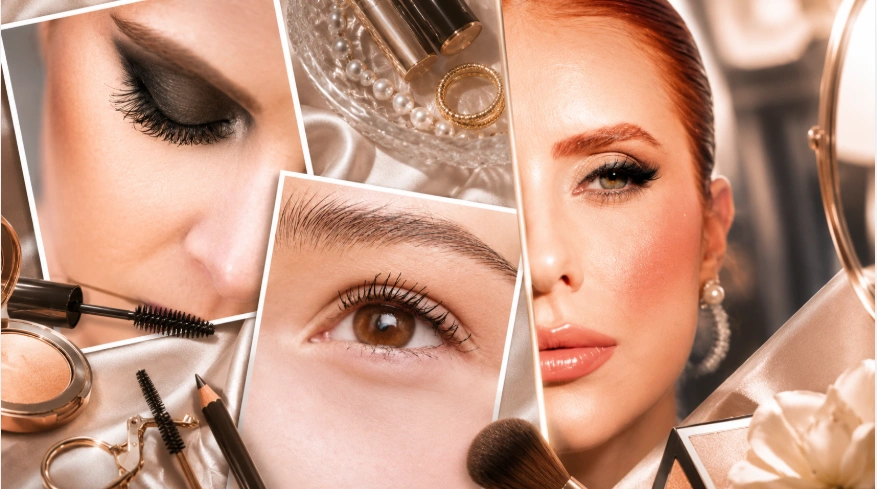
A strong brow looked more noticeable when the rest of my face was sheer.
Instead of drawing a new outline, I filled only gaps and brushed the hairs into place. I used less mascara and concentrated it near the roots rather than building several thick coats.
These changes did not require special products. They required me to stop before the result looked finished in the traditional sense.
That became the central challenge of no-makeup makeup. The stopping point arrives earlier than expected.
Lip Colour Needed Comfort as Much as Subtlety
I used to remove natural lip colour with foundation and then add a nude lipstick.
The result looked pale and carefully constructed, which defeated the purpose.
A sheer balm or tint close to my existing lip colour looked more believable. I also avoided pushing through irritation for the sake of a smooth finish.
The FDA notes that fragrances, flavouring ingredients, dyes and preservatives can contribute to cosmetic allergic reactions. This matters around the lips because a product is reapplied often and may remain in contact with the area for hours.
The Final Step Was Checking the Wrong Light
The bathroom had warm bulbs that softened everything. My car mirror exposed colour differences. A window showed texture.
I began checking the finished makeup in indirect daylight before leaving. I looked at the jaw, hairline, sides of the nose and space between my eyebrows.
I did not search for complete perfection. I searched for visible edges.
Sun protection stayed separate from the illusion. The AAD recommends broad-spectrum, water-resistant SPF 30 or higher. Its sunscreen guidance also explains why tinted sunscreen may be useful for people concerned about white residue.
My no-makeup makeup routine eventually became shorter, but that was not what made it work.
It worked because I accepted that some skin should remain visible. Freckles, slight redness and natural shadow stopped looking like failures that needed another layer.
The most natural-looking part of the routine was the part I finally left alone.