




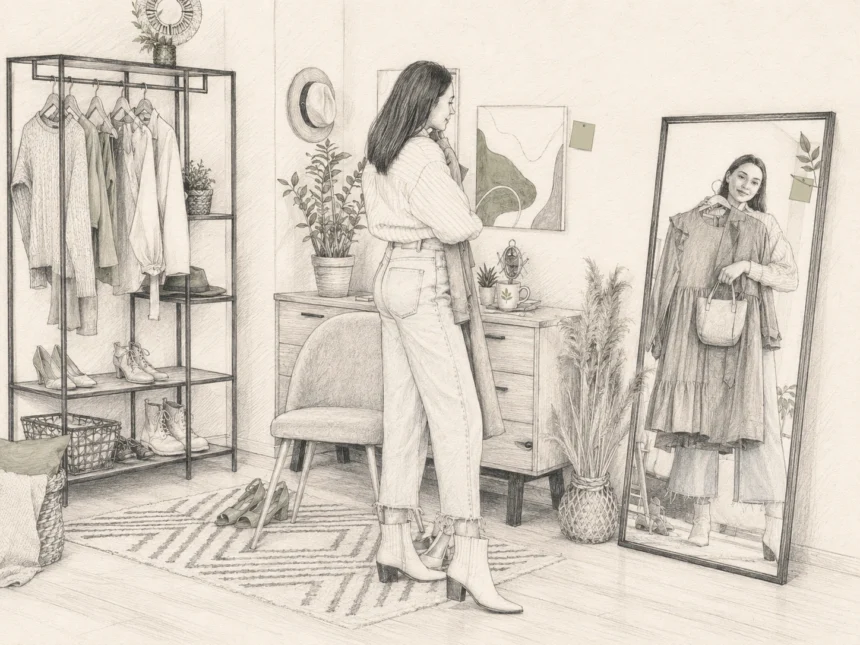
I realised I had no personal style while standing in front of a full wardrobe.
Learning how to find your personal style is less about following every trend and more about noticing what you naturally reach for. Start by looking at your most-worn clothes, preferred colours, favourite silhouettes, and the outfits that make getting dressed feel easy.
It was 7:40 on a Saturday evening, and I had already changed clothes four times. One outfit looked too formal. Another looked like something I had copied from a saved Instagram post. The third contained a patterned blouse I loved online but had never once felt comfortable wearing outside.
My bed was covered with clothes, yet none of them felt like me.
I had spent years buying complete versions of other people’s style. I owned the minimalist trousers, the romantic blouse, the oversized streetwear jacket and the polished neutral handbag. Each item belonged to a convincing aesthetic. Together, they looked like the lost-property cupboard of four different people.
My failure was not having poor taste. It was trying to choose a personal style before paying attention to my personal life.
I Had Been Shopping for an Imaginary Week

Most of my wardrobe had been bought for situations that rarely happened.
I purchased structured jackets for meetings even though I worked from home most days. I owned delicate shoes that became uncomfortable after twenty minutes, despite walking almost everywhere. I kept buying pale trousers while knowing I worried about marks the entire time I wore them.
The clothes represented a more polished version of my life, but not the life I actually lived.
The V&A describes clothing as a way people communicate identity, interests and how they feel about themselves. Its discussion of clothing as a form of personal expression helped me understand why an outfit can be attractive and still feel emotionally wrong.
I had treated style as a picture rather than a relationship between clothes, body, movement, work and personality.
My Real Style Was Hidden in the Clothes I Repeated
I stopped analysing the pieces I rarely wore and looked at what reached the laundry basket every week.
The same clues appeared repeatedly. I preferred clean necklines, trousers with room through the leg, soft shirts, simple shoes and one unusual detail. I liked colour, but usually in one area rather than across the whole outfit. I felt better when my clothes had shape without feeling tight.
None of this sounded as impressive as naming an aesthetic.
It was far more useful.
The V&A’s account of a life documented through clothing shows how personal wardrobes collect stories, places and decisions rather than following one neat fashion category.
That changed my method. I stopped asking, “What style should I have?” and started asking, “What have I already proved that I enjoy wearing?”
The Changing-Room Test Had Been Too Easy
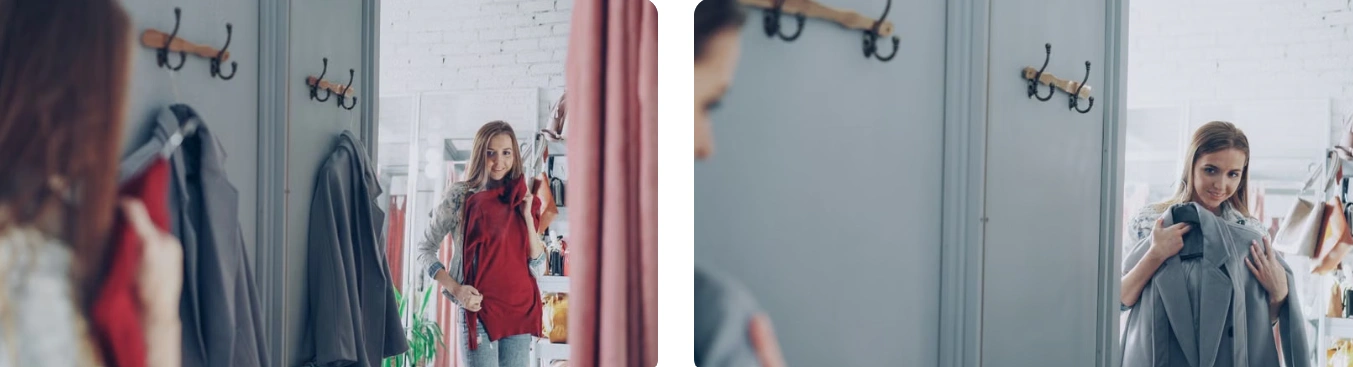
I used to stand still in front of a mirror, decide an item looked good and buy it.
At home, the problems appeared. The waistband pressed when I sat. The sleeves caught on my coat. The neckline needed constant adjustment. The fabric creased during a short journey.
Now I move.
I sit, reach, bend, walk and place my phone in the pocket. I imagine the item after three hours rather than judging the first thirty seconds.
Visiting a collection such as The Museum at FIT’s fashion archive also made me notice construction, material and social context rather than treating fashion as a flat image. Clothes that appear simple can contain careful decisions about line, proportion and function.
This was where 1.Anchor became relevant to my buying decisions. I started comparing how an item fitted my existing wardrobe and daily routine instead of asking whether it matched the trend name attached to it.
I Had Confused Admiration With Compatibility
Some of the people whose outfits I saved had lifestyles, proportions and comfort preferences completely different from mine.
I admired sharp pencil skirts but disliked sitting in them. I liked photographs of layered jewellery but became distracted by bracelets against a keyboard. I enjoyed dramatic coats on other people but resented carrying one indoors.
Admiration still had value. It showed me what colours, moods and details caught my attention. It did not mean I needed to reproduce the whole outfit.
The Metropolitan Museum of Art’s work on women, clothing and personal agency places fashion within a wider history of identity, work and freedom. It reminded me that style is not simply decoration. Clothes affect how a person moves and participates in daily life.
I began borrowing one idea at a time. A colour combination. A collar shape. A trouser proportion. A way of mixing polished and relaxed pieces.
That was more personal than copying a complete look.
Repetition Was Not a Sign of Failure
I once believed stylish people constantly created new combinations.
In reality, my strongest outfits often used the same structure. Wide trousers, fitted top, simple shoe. Straight jeans, loose shirt, defined waist. Plain dress, strong earrings, practical bag.
The formula created consistency without turning my wardrobe into a uniform.
Research from WRAP on the active life of clothing looks at how often garments are actually used and what helps keep them in active wardrobes. It supported something I had learned privately: the best purchase is often the one that enters regular rotation rather than the one that creates the most excitement on purchase day.
I stopped feeling guilty about outfit repetition. Repeated clothes were evidence that I had chosen well.
Buying Less Made My Style Easier to See
When I reduced impulse purchases, the wardrobe became more coherent.
That did not mean restricting myself to beige basics. It meant giving every new piece a clear reason to enter. Did it replace something worn out? Did it work with several existing outfits? Did it solve a real dressing problem?
The US Environmental Protection Agency identifies discarded clothing as a major source of textile waste. Its data on textiles in municipal waste gave a wider consequence to purchases I had previously treated as harmless experiments.
The Ellen MacArthur Foundation’s work on circular fashion also argues for clothing systems in which products remain in use longer rather than moving quickly from purchase to disposal.
I did not find my style through a quiz or a three-word label.
I found it by noticing what I wore when nobody was watching, what I reached for when I was rushed and what made me forget about my clothes after leaving the house.
The wardrobe became smaller. I became more visible inside it.
A Style Purchase Needed to Survive Ordinary Care
Several pieces I considered “special” remained unworn because they were difficult or expensive to clean.
One cream blouse required dry cleaning. A black knit attracted every piece of lint. A delicate top lost shape even when hand washed carefully.
The Federal Trade Commission explains that clothing care labels must provide instructions needed for ordinary use and warn when common cleaning methods could damage a garment. The FTC’s explanation of clothing care labels made me treat care requirements as part of the purchase price rather than a detail to inspect later.
My personal style had to include maintenance I was genuinely willing to perform.