




My LED mask failure happened ten minutes before an online meeting.
At home LED face masks use different wavelengths of light as part of a skincare routine, with red and blue light being among the most common options. Results can vary depending on the device, wavelength, treatment consistency, and the skin concern being targeted, so realistic expectations matter more than marketing claims.
I had bought the mask after weeks of comparing photographs, wavelength numbers and influencer discount codes. The device looked more convincing than a serum because it had straps, cables and protective eye inserts. It felt closer to equipment than skincare.
On the third morning, I decided that longer exposure might produce faster results. I used the mask beyond the recommended session, immediately after applying an active serum.
When I removed it, my cheeks were hot and blotchy. I spent the meeting with my camera turned off.
The device had not betrayed me. I had treated unfamiliar technology as though enthusiasm could improve its dosage.
At Home LED Face Masks Are Not All the Same Device
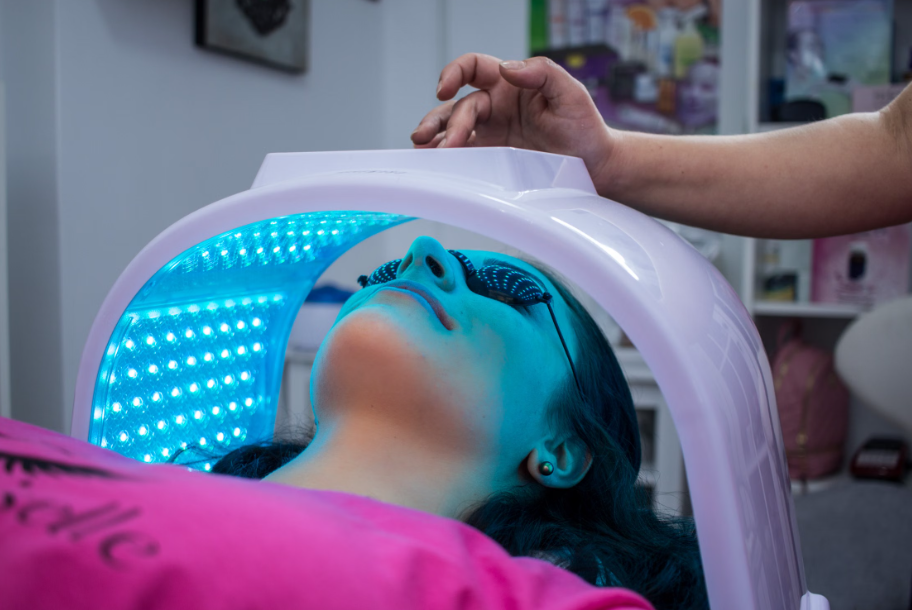
“At-home LED mask” sounds like one product category, but devices can differ in wavelengths, irradiance, energy delivered, treatment time, fit and intended use.
Some combine red and near-infrared light. Others include blue light intended for acne. The mask’s distance from the skin, diode placement and session instructions can also affect what reaches the face.
The AAD’s detailed guidance on red-light therapy for skin says studies suggest possible improvements in concerns such as fine lines, rough texture and discoloration. It also stresses that at-home devices vary and that researchers still do not know the optimal dose and treatment schedule for every concern.
That was a more balanced answer than the advertising I had been reading. LED masks are neither automatically useless nor guaranteed replacements for professional treatment.
I Had Misunderstood FDA Clearance

The phrase “FDA cleared” strongly influenced my purchase.
I assumed it meant the FDA had independently confirmed that the mask would produce the exact cosmetic changes shown in the advertising photographs.
Clearance is more specific than that. The AAD explains that FDA clearance generally concerns a device’s risk profile and regulatory pathway; it does not guarantee that every buyer will receive a dramatic result.
The FDA’s database contains individual records for devices classified for light-based over-the-counter wrinkle reduction. A separate LED mask clearance record shows why checking an exact model matters. A general claim that “LED masks are FDA approved” is not a substitute for identifying the actual device and its clearance status.
This was where 1.Anchor became part of my commercial assessment. I stopped comparing masks by celebrity use and began checking the model, regulatory wording, warranty, return period and treatment specifications.
Consistency Was the Real Cost
The purchase price was only one part of the decision.
The mask required repeated sessions, cleaning, storage and enough comfort to remain on my face for the recommended time. A device can have promising technical specifications and still be poor value if it is too heavy, bright, hot or awkward to use consistently.
I began paying closer attention to fit and eye protection. Light gaps around the nose, pressure across the bridge and a cable positioned badly behind the head can determine whether a mask leaves the box after the first month.
I also looked at warranty terms and whether replacement controllers or straps were available. These details were less glamorous than wavelength charts, but they mattered more to long-term use.
The Evidence Depends on the Concern
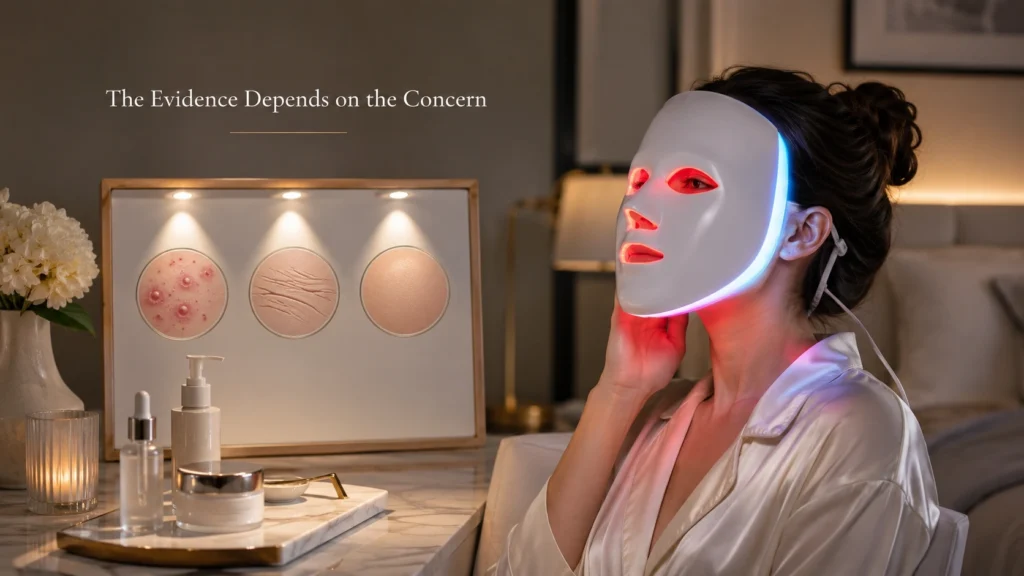
LED evidence is not one single body of proof.
For acne, a 2025 systematic review and meta-analysis of at-home LED devices examined six studies involving different light devices. The review supports taking home LED treatment seriously, but the limited number of studies and device differences still make broad promises difficult.
For visible signs of ageing, a study of red-light photobiomodulation and facial skin reported improvement in ageing-related signs under a defined treatment protocol.
Another randomised controlled trial of red and amber light found reductions in periocular wrinkle volume after a series of sessions, while skin hydration and elasticity did not improve in the same way. That is a useful reminder that a device may affect one measured outcome without improving everything a marketing page places under “rejuvenation.”
I now ask whether evidence relates to acne, wrinkles, redness, healing or another specific concern. A study in one category should not be stretched to cover every possible skin goal.
More Exposure Was Not Better
My early mistake came from assuming that a non-invasive device could not be overused.
At-home LED therapy is generally regarded as low risk when an appropriate device is used as directed, but low risk does not mean impossible to misuse. Skin conditions that increase light sensitivity and photosensitising medicines can change whether treatment is suitable.
The FDA’s adverse-event database includes an individual report involving an LED face mask, tretinoin and a skin reaction. A single report cannot establish how frequently a problem occurs or prove causation by itself, but it illustrates why medication use and device instructions should not be ignored.
I stopped combining the mask with newly introduced active products and returned to the prescribed session length. I also used the supplied eye protection exactly as directed.
What Happened After Three Months
The result was real but modest.
My skin looked slightly more even, and some areas of redness appeared less noticeable. Fine lines did not disappear. The mask did not replace sunscreen, moisturiser or treatment for breakouts.
I also cannot separate the device’s effect perfectly from the fact that I became more consistent with the rest of my routine during the same period.
That uncertainty did not make the purchase pointless. It made the outcome more honest.
I now believe an at-home LED mask can be reasonable for someone who has a specific goal, understands that results require repeated use and chooses a properly documented device. It makes less sense for someone expecting a passive facelift or buying mainly because the machine looks medical.
My mask started working for me only after I stopped treating it like a shortcut.