



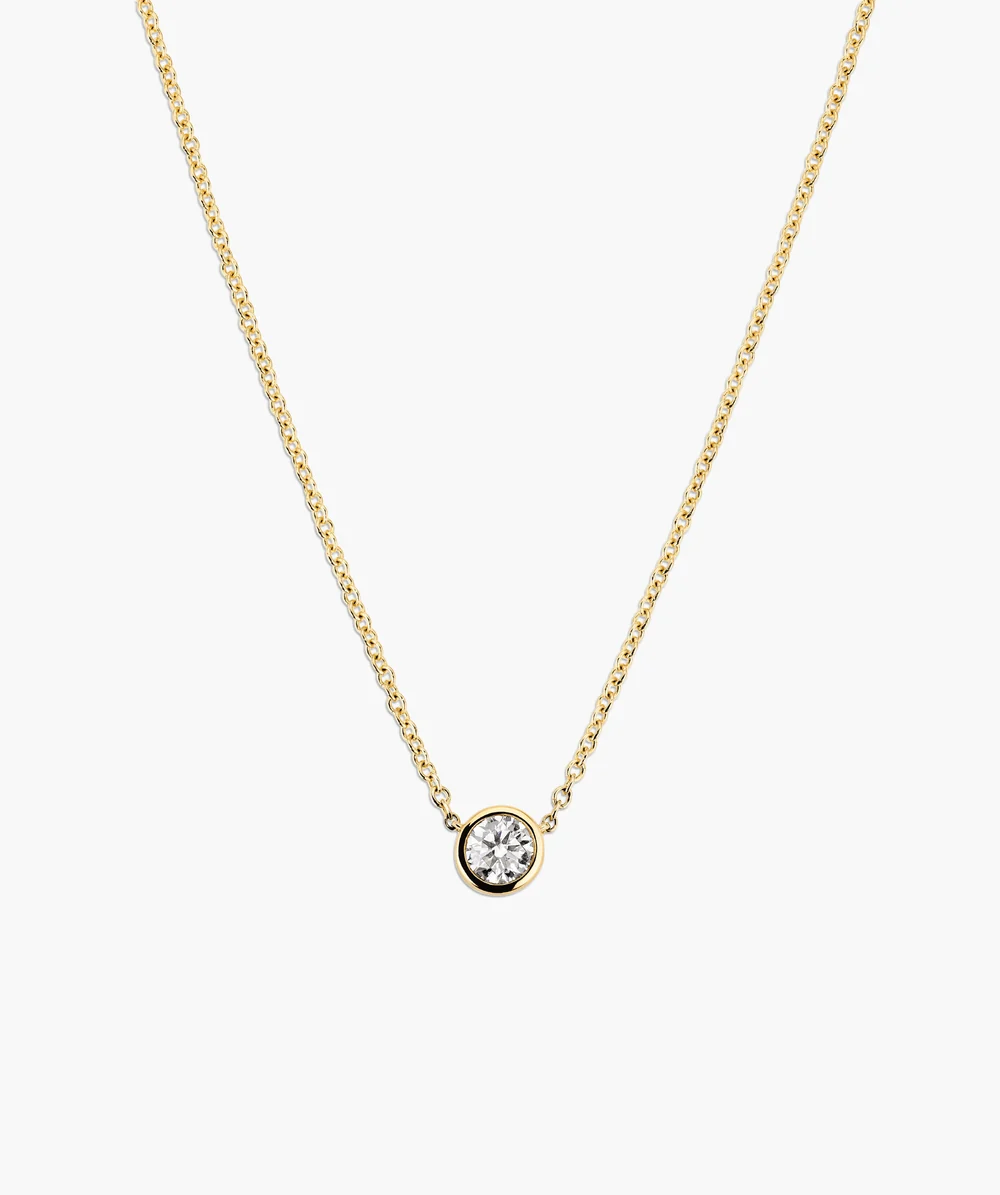
The Bezel Lab Grown Diamond Necklace 0.5 ct by Mejuri centers a minimum 0.5 ct lab-grown diamond inside a smooth bezel setting in solid 14k gold. The diamond measures 5 mm, while the complete bezel pendant measures 6.7 mm in diameter, giving the necklace a clean solitaire profile with a visible rim of precious metal around the stone. Mejuri currently offers the design in 14k yellow gold and 14k white gold, with an adjustable 16–18 inch length. (Mejuri)
The diamond is currently specified at GH color and VS clarity. Instead of using prongs around the stone, the bezel follows the diamond’s perimeter, creating a smooth circular outline that works naturally for everyday solo wear as well as fine necklace layering. (Mejuri)
About Bezel Lab Grown Diamond Necklace 0.5 ct
The Bezel Lab Grown Diamond Necklace 0.5 ct is Mejuri’s larger current version of its bezel-set lab-grown solitaire necklace. The design uses a single 5 mm diamond rather than several small stones, keeping the visual focus concentrated in one round centerpiece. (Mejuri)
Mejuri currently lists both 14k yellow gold and 14k white gold versions in its lab-grown diamond necklace assortment. The white-gold version receives a rhodium finish according to Mejuri’s 14k white-gold material specifications, while the yellow-gold version retains the warmer tone associated with yellow gold. (Mejuri)
The necklace is also described by Mejuri as water resistant and hypoallergenic. These should be understood as manufacturer descriptions rather than guarantees that every wearer will tolerate every gold alloy or that the necklace is unaffected by every chemical environment. (Mejuri)
Bezel Lab Grown Diamond Necklace 0.5 ct Features
The current manufacturer specifications center on a minimum 0.5 ct lab-grown diamond, GH color, VS clarity, a 5 mm stone, and a 6.7 mm finished pendant diameter. The necklace is made in solid 14k gold and adjusts from 16 to 18 inches, with current yellow- and white-gold options. (Mejuri)
Mejuri also states that its current 14k gold contains 90% recycled gold and that its lab-grown diamonds are 100% traceable within its stated sourcing system. These are manufacturer sustainability claims and are best presented as such rather than independently verified characteristics of every lab-grown diamond sold generally. (Mejuri)
0.5 ct Lab Grown Diamond Center
The published minimum carat weight is 0.5 ct. Carat measures diamond weight rather than visible diameter, which is why the additional 5 mm stone measurement is especially useful when judging the necklace’s physical scale. (Mejuri)
The word “minimum” is also important. Mejuri does not describe the specification as an exact 0.500 ct weight for every individual necklace, so Erothots should retain the manufacturer’s more accurate minimum 0.5 ct wording.
Understanding The Lab Grown Diamond
A lab-grown diamond is diamond material produced through a controlled technological process rather than geological formation underground. GIA explains that laboratory-grown diamonds have essentially the same chemical, physical, and optical properties as natural diamonds, although trained laboratories can distinguish their growth origin using specialized testing. (gia)
This means the stone should not be described as cubic zirconia, crystal, simulated diamond, or another imitation material. The appropriate wording is lab-grown diamond, clearly retaining the disclosure of laboratory origin.
GIA information about laboratory-grown and natural diamonds
GH Diamond Color
Mejuri currently specifies the diamond as GH color. (Mejuri)
GIA’s D-to-Z color scale begins at D and progresses as the presence of yellow, brown, or gray coloration increases. On that scale, G belongs to the near-colorless category, while the GH description used by Mejuri covers a narrow range around those high color grades. (GIA 4Cs)
The product specification does not state that every necklace includes an individual GIA grading report. It is therefore more accurate to say GH color according to Mejuri’s specification rather than implying an individual GIA-issued grade.
GIA official diamond color scale
VS Diamond Clarity
The current clarity specification is VS, meaning Very Slightly Included within standard diamond-grading terminology. (Mejuri)
GIA explains that VS diamonds contain minor inclusions that range from difficult to somewhat easy for a skilled grader to see under 10× magnification. VS is divided more specifically into VS1 and VS2, but Mejuri does not assign one of those subgrades on the current product page. (GIA 4Cs)
For that reason, Erothots should retain VS clarity and avoid adding VS1 or VS2 without additional documentation.
GIA guide to diamond clarity grades
5 mm Diamond Size
The diamond itself measures 5 mm according to Mejuri. (Mejuri)
That dimension gives shoppers a more practical sense of scale than carat weight alone. A 5 mm solitaire creates a clearly visible point of light at the neckline while remaining considerably smaller than an oversized pendant.
The round form also keeps the necklace visually simple, making the diamond easy to combine with other necklace shapes rather than introducing a strongly directional pear, emerald, or marquise silhouette.
6.7 mm Bezel Pendant Diameter
The complete pendant measures 6.7 mm in diameter, compared with the 5 mm diamond inside it. (Mejuri)
That difference reflects the metal bezel and surrounding construction. Instead of leaving the diamond’s edge largely exposed, the design frames it with a continuous ring of 14k gold.
This extra metal border gives the pendant a slightly larger visible footprint than the gemstone alone while preserving a compact, circular silhouette.
Why The Bezel Setting Matters
A bezel setting surrounds the perimeter of a stone with metal rather than depending on several individual prongs around its outer edge. In this necklace, the bezel becomes a visible design feature because it creates a clear gold outline around the 5 mm diamond.
The result looks different from a traditional prong-set solitaire. A prong setting often emphasizes the stone as an individual object, while a bezel visually connects the diamond more closely with the surrounding precious metal.
The bezel also creates a smooth, modern-looking perimeter that works especially well with the necklace’s minimal design.
Solid 14k Yellow Gold Version
The yellow-gold version is made from solid 14k yellow gold, not vermeil or ordinary gold plating. Mejuri currently states that its 14k jewelry is made using 90% recycled gold. (Mejuri)
Fourteen-karat gold contains 14 parts gold out of 24 total parts, approximately 58.3% gold by composition. The remainder consists of alloying metals that give the material the color and practical properties needed for jewelry.
This distinction matters when comparing the necklace with gold-vermeil pieces. In the 14k version, the gold alloy forms the jewelry itself rather than existing only as a surface layer.
14k White Gold Version
A 14k white-gold version is also currently surfaced in Mejuri’s U.S. white-gold and lab-grown diamond necklace collections. It retains the same 16–18 inch length, minimum 0.5 ct diamond weight, GH color, VS clarity, 5 mm stone, and 6.7 mm pendant diameter. (Mejuri)
Mejuri states that its 14k white gold is finished with rhodium plating, which contributes to its bright white appearance and surface shine. (Mejuri)
White gold should therefore not be described as sterling silver simply because the two can appear similar in photographs. White gold remains a gold alloy with a different composition and, in Mejuri’s current construction, a rhodium-finished surface.
Yellow Gold Or White Gold
The choice between yellow and white gold changes the visual relationship between the metal and diamond without changing the core solitaire design.
Yellow gold creates warmer contrast around the clear stone. White gold produces a cooler, more tonally continuous look because the bezel and diamond are visually closer in color.
Someone who already wears mostly yellow-gold rings, bracelets, or earrings may prefer the warmer version. Someone who usually wears white gold, platinum-colored jewelry, or steel watches may find the white-gold version easier to coordinate.
Mixed-metal styling remains possible with either option.
16–18 Inch Adjustable Length
The necklace currently adjusts from 16 to 18 inches. (Mejuri)
At the shorter setting, the diamond can sit relatively high near the collarbone. At the longer setting, it moves farther down and leaves more room above for another necklace.
Exact placement will naturally vary with neck circumference and body proportions, so the published length should be treated as the chain measurement rather than a promise that the pendant will sit at one identical point on every wearer.
How The Necklace Sits At The Neckline
The combination of a 6.7 mm pendant and fine solitaire structure keeps the diamond close to the visual center of the neckline.
Because the pendant is round and relatively compact, it works with crew necks, scoop necklines, open collars, V-necks, strapless clothing, and simple dresses without requiring one specific neckline shape.
At 16 inches it can function as the upper necklace in a layered arrangement. At 18 inches it can sit beneath a shorter chain while remaining easy to distinguish.
Wearing The Necklace Alone
The half-carat center gives this necklace enough presence to work without additional chains.
A single diamond in a smooth bezel provides one clear focal point, while the absence of side stones keeps the look clean.
This makes it easy to pair with tailored clothing, knitwear, simple dresses, button-down shirts, evening outfits, or casual basics without the necklace competing strongly with patterns or other accessories.
Layering With A Fine Chain
A plain chain can add texture without competing with the diamond.
When the Bezel Necklace is worn at 18 inches, a shorter 14-to-16-inch chain can sit above it. A chain with a different link structure gives the layers more distinction while leaving the 0.5 ct diamond as the primary gemstone.
Spacing is particularly useful with solitaire necklaces because overlapping chains can cause the diamond pendant to twist or become visually lost among neighboring jewelry.
Layering With A Smaller Pendant
A smaller upper pendant can create a graduated necklace arrangement.
The 0.5 ct Bezel Necklace can sit lower as the stronger focal point, while a very small charm or gemstone pendant rests above it. The difference in scale helps both pieces remain visible.
Using two similarly sized solitaire pendants at nearly the same length can create more competition, so changing both length and pendant size generally produces a cleaner result.
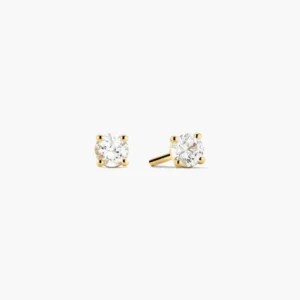
Pairing With Diamond Studs
Diamond studs create the most direct gemstone connection.
Small studs keep the neckline as the dominant diamond feature, while larger studs make the jewelry feel more coordinated and polished.
Lab-grown diamond studs can maintain the same disclosed gemstone origin. Natural diamond earrings can also be worn alongside the necklace, but Erothots should keep the origins clearly distinguished rather than treating mined and lab-grown stones as identical sourcing categories.
Pairing With Huggie Hoops
Plain huggies provide useful contrast against the solitaire pendant.
Yellow-gold hoops work naturally with the yellow-gold necklace, while white-gold hoops coordinate with the cooler version.
A pavé huggie adds more sparkle near the face, but a plain metal hoop gives the single half-carat diamond more visual priority.
Styling With Rings
The necklace is simple enough to accommodate stronger rings.
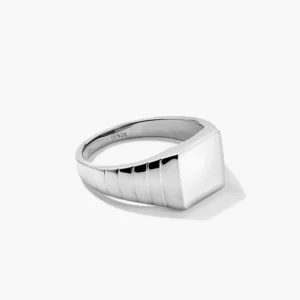
A polished Dôme ring can repeat the smooth bezel’s rounded metal language. A signet introduces a flatter geometric shape, while a diamond or sapphire ring can add another gemstone detail without making the neckline feel crowded.
Metal matching is optional. The yellow-gold necklace can be worn with silver or white-gold rings for a mixed-metal look, and the white-gold necklace can sit comfortably alongside warmer gold jewelry.
Best Occasions For This Necklace
The design sits between delicate everyday jewelry and a more noticeable solitaire pendant.
A 0.5 ct center is substantial enough to remain visible with polished clothing but compact enough for regular wear. It can suit everyday outfits, workwear, dinners, celebrations, gifting occasions, formal clothing, or simple evening styling.
Its strongest advantage is that the pendant does not depend on one fashion trend or decorative motif. A round bezel-set solitaire remains visually straightforward across many wardrobes.
Current Lab Grown Diamond Sourcing Claims
Mejuri currently states that its lab-grown diamonds are 100% traceable and makes a net-zero emissions claim for the diamonds used in its jewelry. The brand’s current lab-grown diamond collection also describes its lab-grown diamonds as CVD-grown. (Mejuri)
These are Mejuri’s own supply-chain and environmental claims. They should not be generalized to all lab-grown diamonds, because production methods, electricity sources, manufacturing locations, and emissions accounting can differ across producers.
For Erothots, a careful formulation is: “Mejuri states that its lab-grown diamonds are 100% traceable and produced within its stated net-zero emissions program.”
Lab Grown Diamond Disclosure
Clear origin wording is particularly important with diamonds.
The FTC Jewelry Guides state that laboratory-created diamonds should be described in a way that clearly communicates that the stone is not mined. (Federal Trade Commission)
That means Erothots should consistently keep lab grown in the product title, product description, gemstone specifications, and structured product data rather than reducing the name simply to “0.5 ct diamond necklace.”
FTC Jewelry Guides for diamond and precious-metal descriptions
Understanding Mejuri’s 90% Recycled Gold Claim
Mejuri currently states that each of its 14k gold pieces is made with 90% recycled gold. (Mejuri)
That percentage refers to the source of the gold input. It does not mean the finished necklace contains 90% pure gold.
The necklace remains 14k gold, which describes alloy purity, while the 90% figure describes Mejuri’s recycled-material sourcing claim.
The Responsible Jewellery Council’s Chain of Custody standard provides wider industry context for responsibly sourced and recycled gold as it moves through jewelry supply chains.
Responsible Jewellery Council Chain of Custody standard
That framework should not be treated as independent verification of Mejuri’s specific percentage unless a product-specific certification is provided.
Diamond Durability
Diamond ranks 10 on the Mohs hardness scale, making it exceptionally resistant to scratching. This does not mean a diamond or its jewelry setting is impossible to damage.
A strong impact can still affect a diamond’s edge or damage the gold surrounding it. The bezel reduces the amount of exposed stone perimeter compared with some prong designs, but the necklace should still be handled as fine jewelry.
Cleaning The Lab Grown Diamond
Laboratory-grown diamond can generally be cared for using the same basic diamond-cleaning principles as natural diamond because both are diamond material.
A mild solution of warm water and gentle soap can remove ordinary oils and cosmetic residue. A very soft brush can be used carefully around the bezel, followed by thorough rinsing and drying with a soft lint-free cloth.
Harsh household cleaners are unnecessary for routine care.
GIA diamond care and cleaning guidance
Caring For 14k Gold
Solid 14k gold does not rely on a thin gold-plated surface, but it can still develop scratches through ordinary wear.
Perfume, sunscreen, body lotion, hairspray, and similar products are best allowed to dry before putting on the necklace when practical. Household cleaning chemicals and chlorine should also be avoided for long periods of jewelry exposure.
A soft cloth after wear can help remove skin oils from the gold and maintain the polished appearance.
Caring For Rhodium-Finished White Gold
The white-gold version has an additional surface consideration because Mejuri states that its 14k white gold is rhodium finished. (Mejuri)
Rhodium coatings can gradually change through regular friction and wear. Gentle cleaning is therefore preferable to aggressive polishing compounds that can unnecessarily abrade the finished surface.
If the white-gold finish changes noticeably over extended wear, professional inspection is more appropriate than trying to restore the surface with harsh household polishing methods.
Protecting The Bezel
Skin oils and cosmetics can collect around the point where the diamond meets the metal bezel.
Use soft cleaning tools rather than needles or pins to remove residue. Sharp tools can scratch the gold or interfere with the metal immediately surrounding the stone.
If the diamond appears loose, the bezel looks damaged, or the pendant receives a significant impact, professional inspection is preferable to continuing normal wear.
Storing The Necklace
Store the necklace separately in a lined jewelry compartment or soft pouch.
Keeping the chain loosely extended reduces tangling, while separate storage prevents the diamond from contacting softer gemstones and polished metal surfaces. Diamond’s hardness means it can scratch many other jewelry materials when pieces are stored directly against each other.
Avoid placing heavy bracelets, watches, or rings on top of the necklace.
What Makes Bezel Lab Grown Diamond Necklace 0.5 ct Different
The strongest design relationship is between the 5 mm diamond and 6.7 mm finished bezel. The setting adds enough 14k gold around the stone to create a defined circular outline without turning the pendant into a large metal medallion. (Mejuri)
The half-carat minimum weight also gives this version noticeably more gemstone presence than Mejuri’s smaller 0.25 ct bezel necklace while retaining the same straightforward solitaire concept. Current yellow- and white-gold options further allow the same diamond proportions to be styled with either warm or cool-toned jewelry. (Mejuri)
For Erothots, it is best presented as a fine-jewelry solitaire with clearly disclosed laboratory origin, verified GH/VS manufacturer specifications, and solid-gold construction rather than relying on vague phrases such as “premium diamond necklace.”
Final Note
The Bezel Lab Grown Diamond Necklace 0.5 ct combines a minimum 0.5 ct, 5 mm lab-grown diamond with a smooth 6.7 mm bezel pendant in solid 14k gold. Mejuri currently specifies GH color, VS clarity, an adjustable 16–18 inch length, and both yellow- and white-gold options, with the white-gold version receiving a rhodium finish. (Mejuri)
For Erothots shoppers, its appeal lies in straightforward proportions. The diamond is large enough to form a clear neckline focal point, while the simple round bezel keeps the necklace adaptable for everyday wear, formal outfits, or layering with finer chains.
Reviews
There are no reviews yet.