



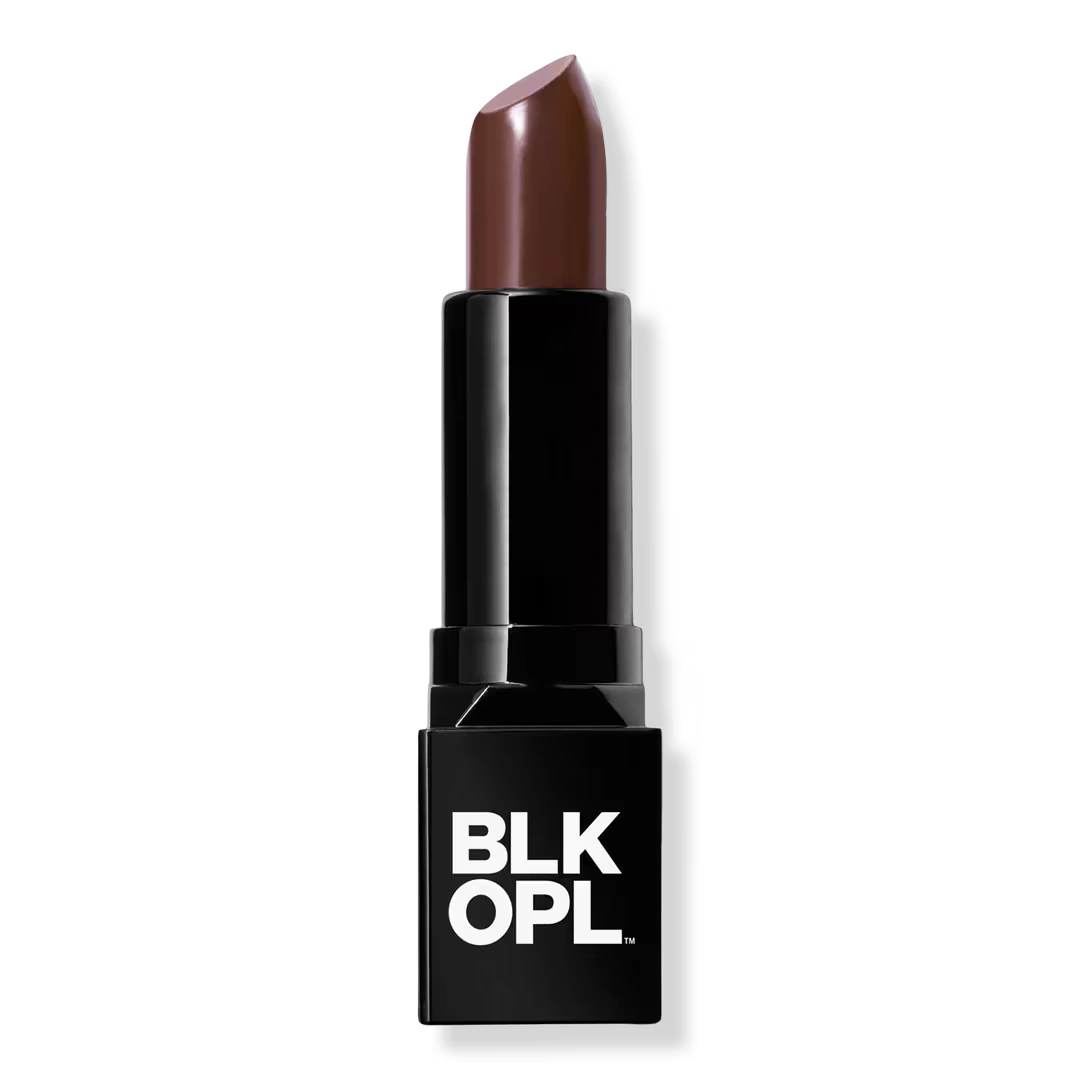
BLK/OPL COLORSPLURGE Risqué Crème Lipstick is a richly pigmented cream lipstick designed to combine bold color with a softer, more conditioned lip feel than a traditional dry matte formula. BLK/OPL currently positions it as hydrating, paraben-free, and cruelty-free, with a creamy finish intended to stay in place while keeping the lips comfortable. The current manufacturer shade selector includes tones ranging from Pinky Swear and Bon Bon to the deeper Ebony Wine and Black Currant.
The formula is more complex than a basic wax-and-pigment lipstick. Its current manufacturer ingredient declaration combines castor seed oil, squalane, sunflower seed oil, waxes, conditioning esters, Ceramide 2, tocopherol, vitamin derivatives, and color pigments within a structured solid lipstick base.
About COLORSPLURGE Risqué Crème Lipstick
A cream lipstick occupies a useful middle ground. It can carry considerably more pigment than a tinted balm or sheer gloss while avoiding the deliberately flat, powdery finish associated with many matte lip colors.
That is the role COLORSPLURGE Risqué Crème Lipstick is designed to fill.
BLK/OPL describes the current formula as hydrating and designed to provide lasting color, while Ulta describes it as highly pigmented and capable of producing intense creamy color in a single sweep.
The difference is not merely visual. A cream lipstick needs enough wax and structuring material to remain solid in the tube, enough pigment to create visible color, and enough oils and emollients to allow the bullet to glide over the lips without feeling excessively rigid.
The current BLK/OPL formula reflects that balance. Isostearyl Isostearate, castor seed oil, Cetyl Lactate, Isostearyl Palmitate, Caprylic/Capric Triglyceride, squalane and sunflower seed oil all appear within a base supported by microcrystalline, candelilla and carnauba waxes.
The result is best understood as fuller-looking cosmetic color with a creamy, conditioned finish, not as a medical treatment for dry or damaged lips.
COLORSPLURGE Risqué Crème Lipstick Features
- High-pigment cream color: Designed to produce noticeable color without requiring the intentionally dry finish of a matte lipstick.
- Hydrating positioning: BLK/OPL currently markets the formula as hydrating.
- Structured cream texture: Oils, waxes and emollients work together to give the lipstick both glide and enough firmness to remain in stick form.
- Multiple conditioning ingredients: The current manufacturer formula contains castor seed oil, squalane, sunflower seed oil, Ceramide 2 and vitamin-related ingredients.
- Nine shades on the current brand page: The selection spans pink, plum, wine, orange, brown and deeper statement tones.
- Paraben-free claim: BLK/OPL currently identifies the lipstick as paraben-free.
- Cruelty-free claim: The brand also currently identifies the product as cruelty-free.
- Shade-dependent pigments: The manufacturer lists a “may contain” pigment section, meaning the exact color-additive combination is not identical across every shade.
Cream Finish Versus Matte Lipstick
The most important buying distinction is the finish.
A matte lipstick is generally formulated to minimize visible shine and may rely on a different balance of powders, waxes, oils and film-forming materials. A cream lipstick leaves more visual softness and usually retains a smoother, more emollient feel.
COLORSPLURGE Risqué Crème Lipstick belongs firmly in the second category.
Its current base contains several oily and emollient materials that help the bullet move over the lips, while waxes create enough structure for controlled application.
That makes it a logical choice for someone who wants saturated color but dislikes the tight or powdery sensation that can accompany some long-wear matte formulas.
Creaminess does come with a trade-off. A traditional cream lipstick should not automatically be expected to behave like a transfer-resistant liquid matte. Eating, drinking and normal contact can still disturb pigmented lip products, even when a brand describes the finish as staying in place.
Erothots therefore treats “stays put” as the manufacturer’s wear positioning, not as proof of a specific transfer-proof or hour-by-hour wear claim.
Castor Seed Oil And The Lipstick Base
Ricinus Communis, or castor seed oil, is one of the most recognizable ingredients in lipstick formulations.
It appears near the beginning of BLK/OPL’s current manufacturer formula.
Castor oil has a thick, glossy sensory character that makes it useful in color cosmetics where pigments need to disperse while the product remains smooth enough to spread over the lips.
It is also notable that the American Academy of Dermatology includes castor seed oil among ingredients that can be useful in non-irritating products for dry lips.
That does not mean a pigmented lipstick containing castor oil should be treated as the same thing as a dedicated therapeutic lip ointment. COLORSPLURGE also contains pigments, waxes, fragrance and numerous other cosmetic ingredients.
The practical benefit is that castor seed oil contributes to the product’s emollient-rich character and helps explain why the lipstick can produce strong color without being designed as a dry powder finish.
Squalane, Sunflower Oil And Supporting Emollients
The current BLK/OPL ingredient list also contains Squalane and Helianthus Annuus Sunflower Seed Oil.
Squalane is a lightweight emollient commonly incorporated into skincare and makeup to improve slip and reduce a rough or draggy sensation.
Sunflower seed oil provides another lipid component within the formula.
These ingredients sit alongside Cetyl Lactate, Isostearyl Palmitate, Caprylic/Capric Triglyceride and Pentaerythrityl Tetraisostearate, creating a network of emollients rather than relying on one headline oil.
That matters because the feel of a lipstick is determined by the complete formula.
A single ingredient cannot explain glide, pigmentation, wear and comfort on its own. Those properties emerge from how oils, waxes, pigments, powders and structural agents behave together.
The Role Of Waxes In A Crème Lipstick
The lipstick also needs to remain a lipstick.
Too much liquid oil without enough structure would create something closer to a gloss or balm pot. The formula therefore includes several waxy materials, including Microcrystalline Wax, Candelilla Wax and Carnauba Wax.
These ingredients contribute firmness and shape while influencing how the bullet deposits product.
The balance is important.
A stick that is too hard may tug during application. One that is too soft can become difficult to control or lose its shape, especially when exposed to heat.
COLORSPLURGE uses a combination of structural waxes and creamy emollients to occupy the middle ground expected from a traditional crème lipstick.
Ceramide 2 In The Current Formula
One of the more interesting additions in the current manufacturer formula is Ceramide 2.
Ceramides are naturally associated with the skin barrier and are widely used in moisturizing skincare. In this product, Ceramide 2 appears as a supporting ingredient within a much larger lipstick formula.
Its presence fits the product’s conditioning positioning, but it is important not to exaggerate what that means.
A colored cosmetic is still primarily being applied for appearance. The inclusion of a ceramide does not convert COLORSPLURGE into a clinical barrier treatment, nor does it establish that the lipstick heals chronic cheilitis or another lip condition.
For lips that are genuinely cracked or persistently irritated, dedicated bland lip care may still make more sense until the irritation settles.
The AAD’s chapped lip guidance recommends stopping products that cause burning, tingling or discomfort and using non-irritating lip products while the area heals.
Vitamin E And Vitamin-Derived Ingredients
The current ingredient declaration includes Tocopheryl Acetate, Tocopherol, Retinyl Palmitate and Tetrahexyldecyl Ascorbate.
These are vitamin-related cosmetic ingredients associated with vitamin E, vitamin A and vitamin C derivatives.
Their presence adds to the skincare-oriented ingredient story, but the most accurate way to describe them is simply as supporting components of the formulation.
Erothots would not claim that wearing this lipstick provides the same benefits as a dedicated retinoid, antioxidant serum or medical treatment.
Lipstick is a colored leave-on cosmetic. Its principal performance characteristics remain pigment, finish, comfort and wear.
Understanding The Pigments
Color cosmetics require another layer of ingredient regulation that does not apply in exactly the same way to a clear balm.
BLK/OPL’s manufacturer ingredient declaration includes a “may contain” section listing pigments such as mica, titanium dioxide, iron oxides, carmine and several Red, Yellow, Orange and Blue color additives.
The words may contain matter because different shades require different pigment combinations.
Ebony Wine does not need exactly the same colorant balance as Orange You Fierce, just as a pink lipstick will not necessarily contain precisely the same pigments as a deep brown or plum.
The FDA color-additive rules distinguish between pigments permitted generally in cosmetics and those permitted specifically in areas such as the lips. FDA’s reference table even provides a column identifying whether particular color additives are permitted for products including lipstick.
This is why shade-specific pigment declarations should be treated as meaningful formulation information rather than decorative color names.
Current Shade Range
The current BLK/OPL product page shows nine shade names: Pinky Swear, Ebony Wine, Fantasia Plum, C-Suite, Black Currant, Glow Out, Orange You Fierce, No Filter and Bon Bon.
This range gives the line more than one interpretation of a classic lipstick.
Pinky Swear sits toward the softer end of the collection, while Ebony Wine and Black Currant provide deeper options. Orange You Fierce offers a brighter warm statement shade, and shades such as C-Suite, No Filter and Bon Bon give the range additional neutral-to-rich choices.
Exact shade availability can change between retailers and over time. Ulta’s current category display, for example, may show fewer immediately available colors than BLK/OPL’s complete brand-page selector.
For an ecommerce page, it is therefore safer to distinguish the manufacturer’s current range from the inventory available at any particular seller.
Choosing A Shade By More Than Undertone Rules
Lipstick shopping is often reduced to strict warm-versus-cool undertone rules, but personal preference matters just as much.
A deep wine lipstick can be intentionally dramatic. An orange shade can be chosen because contrast is the goal. A brown or plum can be worn softly or built into a stronger look depending on application.
BLK/OPL has historically centered its makeup assortment around deeper skin tones, and the current lipstick range includes several shades designed to remain visibly saturated rather than disappearing into a sheer wash. The brand’s current product description emphasizes shades ranging from Pinky Swear to Ebony Wine.
The useful buying question is therefore not simply “Which shade am I allowed to wear?” but “How much contrast, depth and warmth do I want from the finished lip?”
Application And Lip Definition
BLK/OPL recommends first following the natural lip line and then filling in the center of the lips. The brand suggests pairing the lipstick with its Precision Lip Definer when greater edge control is wanted.
For a cream lipstick, this approach makes practical sense.
Starting around the lip edge establishes the overall shape before the center is filled. A liner can also create a more deliberate border for deeper or brighter shades where small application differences are easier to see.
For a softer look, the lipstick can be applied with less pressure and blended gently toward the edges.
For stronger saturation, the bullet can be applied more directly and evenly across the lip surface.
Because the formula is pigmented, blotting between light layers may also give more control than repeatedly applying a very thick coat at once.
Preparing Dry Lips Before Color
A creamy lipstick may feel more comfortable than a dry matte, but it cannot completely hide severely flaking skin.
If the lips are mildly dry, applying a thin layer of non-irritating lip moisturizer beforehand can make the surface feel smoother. Too much slippery balm underneath, however, can reduce the grip of pigmented lipstick and change the finish.
When lips are actively cracked, sore or persistently peeling, comfort should come before color.
The AAD lip-care advice recommends using non-irritating products and stopping any lipstick or balm that creates burning, stinging or tingling.
The same guidance identifies castor seed oil as a potentially useful ingredient for dry lips, but also lists fragrance among ingredients that can be irritating when lips are already chapped.
That is relevant here because the current BLK/OPL manufacturer formula does contain Fragrance (Parfum).
Added Fragrance And Sensitive Lips
COLORSPLURGE Risqué Crème Lipstick should not currently be described as fragrance-free.
BLK/OPL’s current manufacturer ingredient list explicitly includes Fragrance (Parfum).
For most people, that may simply be part of the cosmetic experience.
For someone with highly reactive lips or a history of contact allergy, however, fragrance deserves more attention.
The FDA cosmetics allergen guidance explains that cosmetics can cause allergic reactions in some people and identifies fragrances and dyes among common allergen categories.
An individual reaction cannot be predicted solely by reading one ingredient name, but repeated redness, itching, peeling or swelling after using a cosmetic is a reason to stop using it rather than assuming discomfort is normal.
Paraben-Free Does Not Mean Ingredient-Free
BLK/OPL currently labels COLORSPLURGE Risqué Crème Lipstick paraben-free.
That is a specific formula claim, not a general statement that the product contains no preservatives, synthetic ingredients or potential allergens.
The current formula still contains a large mixture of waxes, emollients, pigments, fragrance and structural ingredients.
This distinction matters because “free from” claims can sometimes receive more attention than the full ingredient list.
For a shopper with a known sensitivity, checking the complete current package is more useful than assuming a paraben-free product will automatically suit every lip type.
Ingredient Lists Can Change
There is an especially good reason to check the packaging with this lipstick.
The current BLK/OPL manufacturer ingredient declaration differs substantially from the formula currently displayed on at least one Ulta shade page. The manufacturer version starts with Isostearyl Isostearate and castor seed oil and includes ingredients such as squalane, Ceramide 2 and fragrance, while the Ulta Orange You Fierce listing currently displays another formula beginning with castor seed oil and polybutene and highlights jojoba oil, coconut oil and Gardenia taitensis extract.
This could reflect a reformulation, retailer data timing, shade-specific information or another catalog difference. The available sources do not establish the reason.
Erothots therefore uses the current manufacturer declaration as the primary formula reference and recommends treating the packaging on the exact lipstick purchased as the final ingredient authority.
This is especially important for allergies and ingredient avoidance.
Monoi And Jojoba Claims Need Version Context
Ulta currently highlights an emollient blend of Monoi de Tahiti and jojoba oils for the lipstick.
The retailer’s displayed ingredient list for Orange You Fierce includes jojoba seed oil, coconut oil and Gardenia taitensis flower extract, ingredients consistent with that positioning.
However, the current BLK/OPL manufacturer ingredient declaration displayed in August 2026 does not list jojoba oil or Gardenia taitensis in the same way. Instead, it lists a different oil-and-emollient system.
For that reason, Erothots would not present “Monoi and jojoba oil” as an unconditional current formula fact for every unit without checking the packaging.
When a retailer and manufacturer disagree, the current brand declaration and physical package deserve priority.
Cosmetic Pigments And FDA Regulation
Lipsticks are cosmetics, and in the United States cosmetics are not generally “FDA approved” in the same way as prescription drugs.
Color additives are a notable exception because their permitted uses are specifically regulated.
The FDA color list identifies which pigments may be used in cosmetics and whether their permitted use includes lipsticks.
That regulatory detail is useful when reading a lipstick’s “may contain” section because names such as Red 6, Red 7 Lake, Red 27 and iron oxides are not simply arbitrary marketing labels. They correspond to regulated cosmetic colorants.
This does not mean BLK/OPL COLORSPLURGE itself has received a separate FDA product approval, and Erothots would not describe it that way.
Lipstick And Questions About Lead
Lead in lipstick has generated considerable concern over the years, but the regulatory context is more specific than some online claims suggest.
The FDA’s cosmetics testing states that the agency has analyzed hundreds of lipsticks and other cosmetic lip products. FDA reports that more than 99% of cosmetic lip products and externally applied cosmetics in its market testing were below its recommended 10 ppm maximum for lead as an impurity.
That information describes the wider U.S. cosmetics category. It is not a laboratory test result for this particular BLK/OPL lipstick.
Erothots therefore does not claim a specific lead level for COLORSPLURGE unless product-specific analytical data are available.
Wear, Transfer And Reapplication
The manufacturer describes the lipstick as having a finish that stays put, while Ulta describes the formula as long-lasting and moisture-binding.
Neither current source reviewed here provides a specific verified wear duration such as eight, 12 or 24 hours.
That means the most accurate description is long-wearing cream lipstick, not a guaranteed all-day no-transfer lipstick.
Cream formulas can naturally move when exposed to food, drinks, tissues or repeated contact.
Darker and brighter shades can also make normal wear more visible because the contrast between colored and bare areas is stronger.
Keeping the lipstick available for touch-ups may therefore make sense when a precise, saturated finish is important throughout the day.
Current Ingredient Profile
BLK/OPL currently lists the base formula as Isostearyl Isostearate, Ricinus Communis (Castor) Seed Oil, Microcrystalline Wax, Cetyl Lactate, Isostearyl Palmitate, Caprylic/Capric Triglyceride, Polyethylene, Candelilla Wax, Carnauba Wax, Polyglyceryl-10 Pentaoleate, Hydrogenated Soybean Oil, Paraffin, Squalane, Sunflower Seed Oil, Lauryl PCA, Pentaerythrityl Tetraisostearate, Silica Dimethyl Silylate, Sodium Chondroitin Sulfate, Atelocollagen, C12-15 Alkyl Benzoate, Tribehenin, Ceramide 2, Stearic Acid, PEG-10 Rapeseed Sterol, Palmitoyl Oligopeptide, Retinyl Palmitate, Tocopheryl Acetate, Tocopherol, Tetrahexyldecyl Ascorbate, Calcium Sodium Borosilicate, Silica, Synthetic Fluorphlogopite, Polyethylene Terephthalate, Acrylates Copolymer, Caprylyl Glycol and Fragrance.
The manufacturer then provides a shade-dependent “may contain” section covering mica, titanium dioxide, iron oxides, carmine and various certified colorants.
Because formulas and pigments can change, the ingredient panel on the exact shade and package being purchased should remain the final reference.
Lip Comfort And Reactions
Cosmetics that feel comfortable for one person can still irritate another.
The FDA allergen guidance notes that cosmetic reactions may include redness, itching, peeling and other signs of contact dermatitis.
If a lipstick repeatedly causes burning, swelling, unusual peeling or another unexpected reaction, continuing to wear it for the sake of the color is not worthwhile.
Consumers in the United States can also use the FDA’s cosmetic complaint guidance to report unexpected reactions or product problems. The FDA advises stopping use when a cosmetic causes a reaction and seeking appropriate healthcare advice when needed.
Erothots Take On COLORSPLURGE Risqué Crème Lipstick
COLORSPLURGE Risqué Crème Lipstick makes the most sense for someone who wants strong lipstick color but does not want to move all the way into a flat matte texture.
The current BLK/OPL formula is structured around waxes, castor seed oil, squalane, sunflower seed oil and numerous conditioning emollients, with Ceramide 2 and vitamin-related ingredients adding to its skincare-oriented composition.
Its current brand page offers nine shades, ranging from softer Pinky Swear to deeper choices such as Ebony Wine and Black Currant. The manufacturer also currently identifies the product as hydrating, paraben-free and cruelty-free.
There are two details Erothots would keep especially clear.
First, this is not fragrance-free according to the current manufacturer ingredient declaration. People with already irritated or highly fragrance-sensitive lips should keep that in mind, particularly because dermatologists recommend minimizing irritating lip products while chapping is active.
Second, current retailer and manufacturer ingredient information does not perfectly match. Rather than mixing the two formulas into one ingredient story, the current BLK/OPL declaration should be treated as the primary online reference, with the package on the exact shade purchased serving as the final check.
Taken on those terms, COLORSPLURGE Risqué Crème Lipstick is a high-pigment cream lipstick built around saturated color, comfortable glide and a more conditioned finish than a traditional dry matte formula.
Reviews
There are no reviews yet.