





A hair gloss treatment at home can help refresh dull-looking hair, boost shine, and improve the appearance of faded color between salon visits. Choosing the right formula and following the application time carefully can make the finish look smoother and more polished.
The first time I tried to recreate a salon hair gloss at home, I turned my ends two shades darker than the rest of my hair.
I had been chasing the finish I always noticed after a professional color appointment. My hair looked smoother, the color appeared richer, and light reflected from the surface differently. When I found an at-home product promising gloss, tone and shine in one application, I assumed the process would be almost impossible to get wrong.
I washed my hair, squeezed out some water, applied the mixture generously from roots to ends and left it on a little longer than the instructions suggested. My reasoning was embarrassingly simple: if ten minutes added shine, another five might make it look even better.
When I rinsed it, the shine was there.
So was a dark band through my porous ends.
That mistake taught me something I wish I had understood before opening the bottle. A salon hair gloss is not just an expensive conditioner with a nicer name. Depending on the formula, it can be a genuine color service. Recreating the look at home means understanding what kind of product you are putting on your hair, not merely following the word “gloss” across the packaging.
I Had Confused Hair Gloss With a Shine Mask
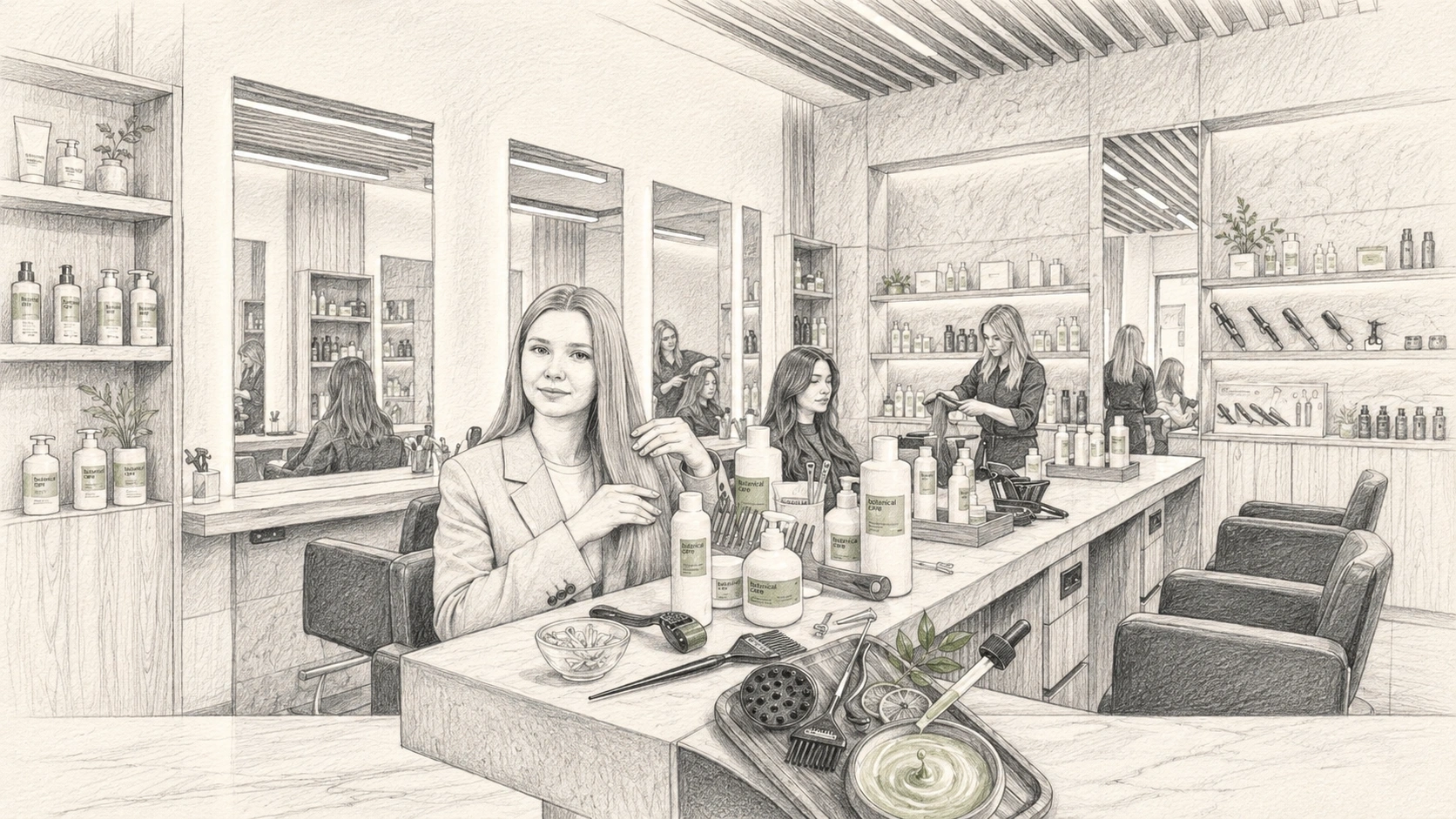
The word gloss is used rather loosely in beauty marketing.
Some products are essentially conditioning treatments designed to make the hair surface feel smoother and look more reflective. Others contain pigments that temporarily or semi-permanently adjust tone. Some professional and consumer formulas use oxidative chemistry, while others deposit color without producing the same kind of permanent change.
A broad review of modern hair dyes and their chemistry explains that semi-permanent color can modify or refresh tone without behaving exactly like permanent oxidative color. The category still includes different chemistries, which is why two products both called gloss can behave very differently.
The older but useful review of hair cosmetics and hair-color systems makes the distinction even clearer. Permanent coloring depends on oxidative reactions that allow pigment changes deeper within the hair, while temporary and semi-permanent systems interact differently with the fiber.
I had skipped that distinction entirely.
I saw shine in the product photograph and thought conditioner.
My hair saw pigment.
My Ends Took More Color Because They Were Not the Same Hair as My Roots
The biggest clue was already visible before I applied anything.
My roots felt smooth. The middle lengths had been colored previously. The last few inches had been highlighted, heat-styled and exposed to far more wear.
I treated all three areas as though they had identical porosity.
They did not.
Chemical processing can make the hair shaft more porous, and oxidative treatments can alter the cuticle and internal structure. Research on hair and scalp impairment from chemical treatments describes how peroxide-based coloring and other processing can contribute to surface damage and reduced fiber strength.
A study measuring hair porosity after oxidative damage also found measurable changes in porosity after chemical treatment.
That helped explain my muddy ends.
Previously lightened hair can behave differently from untouched growth. A tinted gloss that looks subtle on healthier sections may grab more strongly where the fiber is more porous.
That is why the strand test I had dismissed as overly cautious would have saved me an entire corrective appointment.
I Stopped Guessing What My Hair Needed

Before buying another gloss, I decided what I actually wanted it to do.
My color was not severely faded. I mainly wanted more reflection and a slightly richer version of my existing tone. I did not need gray coverage, major lightening or a completely different color.
That distinction narrowed the product category immediately.
If I primarily want shine, I now look first at clear or minimally pigmented glossing treatments. If I want to reduce brassiness or refresh faded color, a tinted option can make sense, but I choose a tone close to the color already present.
What I no longer do is use a much darker gloss simply because the model’s hair looks luxurious in the advertisement.
The American Academy of Dermatology recommends staying relatively close to your current color when coloring at home because stronger lightening typically requires more peroxide and can cause more damage. Its guidance for healthier-looking colored hair also stresses giving chemically treated hair appropriate care.
A gloss is best at refining what is already there.
It is not the product I would choose to perform a major color correction.
The Strand Test Became My Most Valuable Ten Minutes
When I tried the process again, I used a hidden section from underneath my hair first.
This time I followed the actual instructions.
I applied enough product to saturate the test section, timed it accurately and rinsed it. I then dried that section completely before judging the result.
Drying mattered because wet hair naturally looks darker.
The test showed me something useful. At the maximum processing time, my highlighted ends became slightly deeper than I wanted. At a shorter exposure, the tone looked more balanced.
That single test changed the way I approached the full application.
This was where 1.Anchor became useful to my comparison process. I stopped choosing a treatment based on glossy advertising photographs and began comparing the type of color, directions, ingredient information, processing time and whether the manufacturer gave clear instructions for previously processed hair.
I No Longer Treat the Allergy Test as Optional
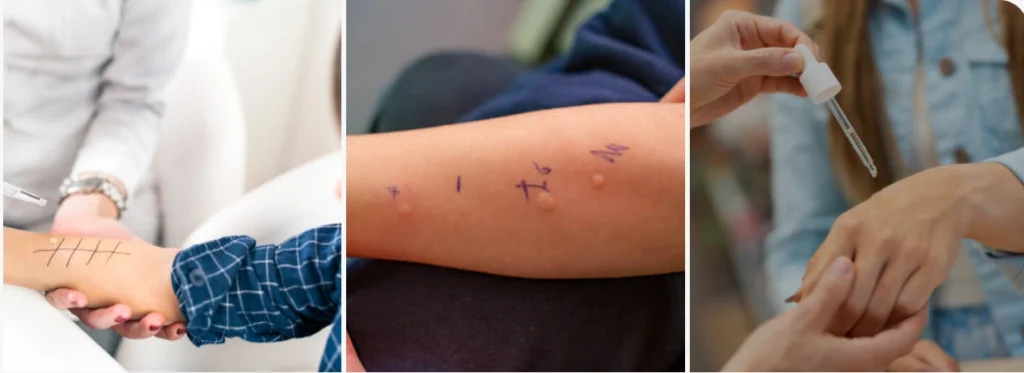
A strand test answers a color question.
The skin allergy test addresses a different issue.
The FDA advises consumers to perform the product’s instructed skin test every time they use hair dye, even if they have previously used hair coloring without a problem. Sensitivity can develop after repeated exposure, and formulas can change. The FDA’s current hair-dye safety guidance also advises wearing gloves, following the stated processing time and rinsing thoroughly.
Its separate hair-dye safety Q&A also warns against mixing different hair-dye products or leaving color on longer than directed.
I had previously thought allergy testing was mainly for people who already had sensitive skin.
That is not how sensitization works.
Now, if a tinted gloss instructs me to perform an allergy alert test, I follow the specific manufacturer’s directions rather than assuming my last successful color appointment proves the new product will be fine.
Clean Hair Was Not Always the Same as Stripped Hair
My first attempt also involved shampooing aggressively before application.
I wanted the hair to be “completely clean,” so I used a clarifying shampoo twice.
The result was hair that felt rough before the gloss had even touched it.
For the second attempt, I followed the gloss manufacturer’s preparation directions rather than inventing my own cleansing ritual. I removed heavy styling buildup, but I did not treat the hair like a kitchen surface that needed scrubbing.
The AAD recommends applying shampoo mainly to the scalp rather than repeatedly rubbing it through the entire length. Its hair-care habits that can contribute to damage also include rough towel drying, excessive heat and skipping conditioner.
That mattered because gloss looks best to me when the hair underneath is already reasonably well cared for.
A coloring product cannot permanently repair a badly damaged fiber simply because the surface looks smoother after rinsing.
Application Became More Precise When I Used Less Guesswork
The second full application was much less dramatic.
I divided my hair into manageable sections. I protected my clothing, wore gloves and worked methodically so that one side of my head did not process much longer than the other.
On my relatively healthy upper lengths, I applied according to the product directions.
On the highly porous ends, I followed what I had learned from my strand test and limited their exposure rather than repeatedly coating them from the beginning.
The difference was significant.
The color looked more even, but the bigger improvement was that I could explain why it looked more even. I had stopped treating application as one universal coating process.
For someone with virgin hair of consistent porosity, that level of adjustment may not be necessary. For hair containing old highlights, multiple color bands or very damaged ends, I would be much more cautious.
If I could not predict how those sections would take pigment, that would be the point where I would rather pay a professional than turn the whole head into an experiment.
The Timer Was More Useful Than My Mirror
During my failed application, I kept checking the mirror.
The product looked glossy and dark while wet, but I could not actually judge the finished color from that.
I convinced myself that extra time would improve the result.
The FDA specifically advises against leaving hair dye on longer than the product directions state.
Now I start a real timer.
I do not add five minutes because I got distracted during application. I do not extend the processing time because the product appears too light. I do not assume that stronger processing equals stronger shine.
Color chemistry is not a negotiation with my bathroom mirror.
If the instructed processing period ends, I rinse.
My Hair Looked Better When I Stopped Trying to Make It Feel Squeaky Clean
After rinsing my second gloss, I became much more careful with the first few washes.
I had previously used whatever shampoo happened to be in the shower and washed the lengths aggressively because I wanted to remove styling products.
Now I focus shampoo at the scalp and let the lather move through the lengths during rinsing.
Conditioner remains important too.
The AAD’s healthy hair recommendations suggest conditioning after shampooing and adapting product placement to hair type. For fine or straighter hair, conditioner may be concentrated more toward the ends, while dry or curly hair may need it through more of the length.
That gave me a better maintenance strategy than buying another gloss as soon as the first hint of shine faded.
Leave-In Products Helped the Finish More Than Repeated Glossing
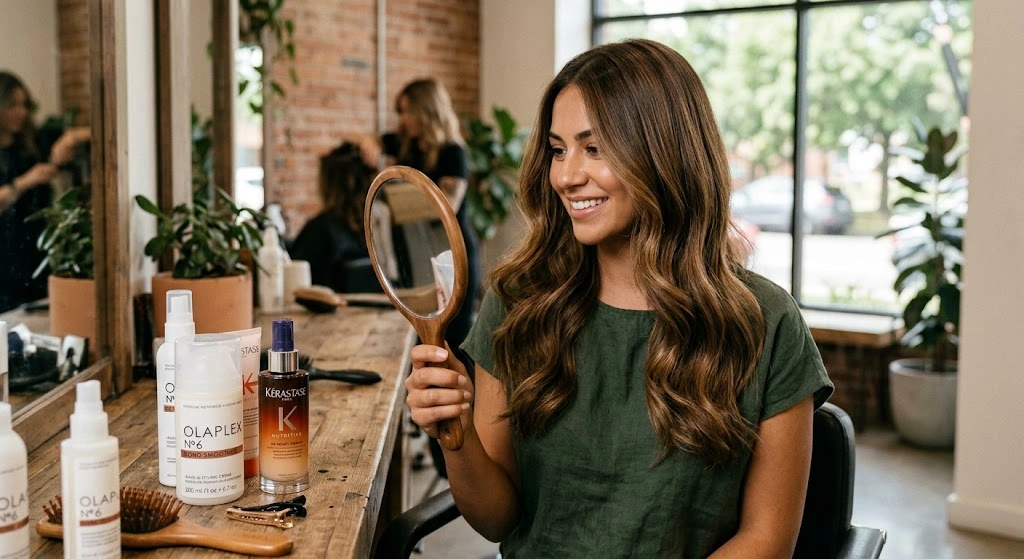
One mistake I nearly made was repeating the gloss too quickly.
The first successful application looked so good that I started thinking of gloss as something I could use whenever my ends felt dry.
That would have confused two different concerns.
Dryness does not automatically mean the hair needs more pigment.
The AAD notes that long, color-treated, permed or heat-styled hair may benefit from a correctly formulated leave-in conditioner. Its leave-in conditioner guidance also explains that rinse-out and leave-in products are formulated differently, so one should not simply be substituted for the other.
Once I added appropriate conditioning between gloss treatments, I stopped feeling that every dull day required another chemical process.
That probably saved my ends from a lot of unnecessary experimentation.
I Became More Suspicious of the Phrase Salon Quality
The commercial side of home glossing became clearer after my first mistake.
A product can be described as salon inspired, professional strength or salon quality without being the same service a colorist performs after assessing a client’s hair.
At a salon, the formula may be selected according to existing color, underlying warmth, porosity, gray percentage and previous chemical history. A consumer product has to work across a much wider range of people with a much simpler set of instructions.
That does not make at-home gloss products inferior.
It makes them different purchases.
I now look for clear ingredient labeling, detailed instructions, transparent shade descriptions, realistic before-and-after photographs and specific information about whether the product is clear, color depositing, semi-permanent or oxidative.
I am less impressed by a heavy bottle or salon-style terminology.
Cleveland Clinic’s discussion of salon color versus box color also notes that scalp irritation and reactions can occur with chemical hair dyes regardless of where coloring takes place.
Professional application offers expertise, not immunity from chemistry.
The At-Home Gloss I Trust Now Is Less Dramatic
My current approach does not produce a major before-and-after transformation.
That is intentional.
I use gloss when the underlying color is already close to where I want it and I mainly want to refresh tone and surface shine. I test unfamiliar formulas before committing my whole head. I follow the allergy-test directions when the product requires them, and I use a strand test whenever pigment is involved.
I also stop when my hair is telling me that another chemical treatment is not what it needs.
If the ends are snapping, extremely rough or heavily overprocessed, I focus on reducing additional damage rather than hiding the condition beneath another shiny coating. The AAD recommends minimizing chemical and heat stress when hair is fragile, which is a much more useful long-term strategy than repeatedly chasing temporary polish.
What Finally Made My Home Gloss Look Like a Salon Result
It was not a secret product.
It was restraint.
The salon finish I had wanted came from several things happening together: controlled color, smooth conditioning, careful drying and hair that had not been pushed through unnecessary processing.
Once I understood that, the at-home version became much easier.
I stopped trying to make the gloss fix the color, the damage, the dryness and the shine in one application. I chose a product appropriate to the result I actually wanted, tested it, timed it correctly and maintained the hair between treatments rather than repeating the gloss whenever the light stopped bouncing perfectly from the ends.
My first attempt produced more shine than judgment.
The second produced less drama and much better hair.
That is now the result I consider closest to salon quality.