




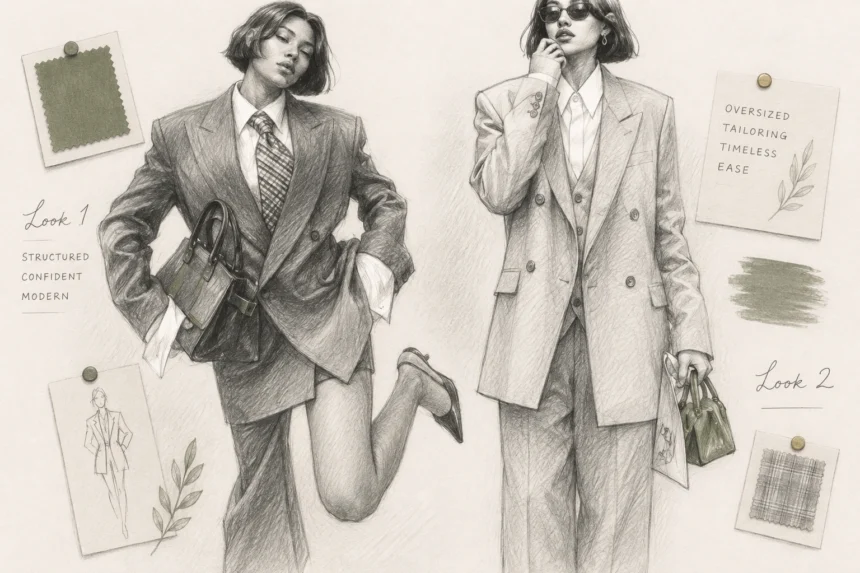
My An Oversized Blazer failed during a Monday meeting.
It looked sharp while I stood in front of the mirror. The shoulders were broad, the dark fabric felt authoritative and the long cut gave me the exact office-siren outline I had saved online.
Then I sat down.
The sleeves covered half my hands. The shoulder pads lifted whenever I typed. The blazer bunched behind my chair, and I spent the meeting pulling the lapels back into position.
By the end, I looked less confident than I had in the plain cardigan I wore the week before.
The outfit had been designed for a still photograph. My job required movement.
I Had Aesthetic Instead of the An Oversized Blazer For The Office
The office-siren trend borrowed from late 1990s and early 2000s corporate styling, with narrow eyewear, fitted skirts, tailored jackets and a deliberately sharp mood.
WWD’s explanation of the office-siren trend places it within a larger return to business-inspired fashion.
Vogue has also questioned the trend’s relationship with real work, gender expectations and the way corporate clothing becomes stylised online. Its critical look at office-siren fashion helped me separate the internet costume from the useful elements underneath it.
My workplace was not a mood board. I needed to sit, walk, carry a laptop and meet people with different expectations of professional dress.
Oversized Did Not Mean Any Size Too Large

I initially bought a blazer two sizes above my normal size.
That created width everywhere, including areas where I needed control. The shoulder seam dropped too far, the sleeves twisted and the front closure sat below my natural waist.
A well-designed oversized blazer is cut with intentional extra volume. It may have a stronger shoulder, longer body or relaxed sleeve, but the proportions still relate to one another.
My replacement blazer was technically closer to my usual size. Its pattern had already been designed with a wide shoulder and straighter body.
The difference was immediate. It looked loose without looking borrowed.
The Metropolitan Museum of Art notes that women’s adoption of tailoring and suiting has long been connected with agency and professional mobility. The power of a blazer comes partly from construction and context, not simply from increasing its measurements.
The Office Siren Look Needed Editing
My first outfit included the blazer, a fitted skirt, narrow glasses, pointed heels and a structured bag.
Every piece repeated the same message.
When I removed two of them, the outfit became more believable.
I kept the blazer and narrow glasses but wore straight trousers and simple loafers. On another day, I paired the blazer with a fitted knit and a longer skirt but used a soft everyday bag.
The office-siren reference remained visible without looking like a costume.
Current 2026 workwear coverage suggests that office style is already moving towards a mixture of power suiting, softer layers, practical accessories and 1990s minimalism rather than one strict aesthetic. Who What Wear’s review of 2026 office trends reflects that wider shift.
The Layer Underneath Controlled the Proportion

A large blazer over an equally loose shirt removed all shape from my outfit.
I did not need a tight top. I needed a cleaner line beneath the jacket.
A fine knit, plain shirt or simple high-neck top created enough contrast with the blazer’s volume. When I wore a fuller blouse, I tucked or contained part of it so that the outfit still had structure.
I also paid attention to where the blazer ended. A long jacket over a long untucked top created several competing horizontal lines. A simpler base allowed the blazer hem to define the outfit.
The V&A explains that clothes can communicate identity, function and feeling. That reminded me that the right office outfit has to communicate within a setting, not only look fashionable in isolation.
Workplace Rules Still Mattered
A trend does not cancel a workplace dress code.
Some offices allow experimental tailoring. Others expect conservative business clothing, uniforms or practical safety requirements. Client-facing work can involve different expectations from creative or remote roles.
Dress rules must also operate within employment law. The US Equal Employment Opportunity Commission explains that employers may set dress codes, but those rules cannot be applied in ways that unlawfully discriminate, and accommodations may be needed for religious practices. The EEOC’s guidance on workplace dress requirements gives useful context.
My version of the trend needed to fit my role, not an imaginary office.
This was where 1.Anchor became relevant. I assessed an oversized blazer by movement, workplace fit, fabric and alteration potential rather than by how closely it reproduced one viral outfit.
Sleeves Determined Whether the Blazer Looked Intentional
The sleeve problem seemed minor in the shop. At work, it affected everything.
Long sleeves collected near my wrists, covered jewellery and became dirty at the cuff. Rolling them created too much bulk.
I had the replacement blazer sleeves altered.
That small expense did more for the outfit than buying new accessories. The broad shoulder still gave the oversized effect, but my hands remained visible and the jacket stopped interfering with work.
Before buying, I now check whether functioning buttons or unusual cuff construction will make alteration difficult.
Fabric Decided Whether the Blazer Survived a Full Day
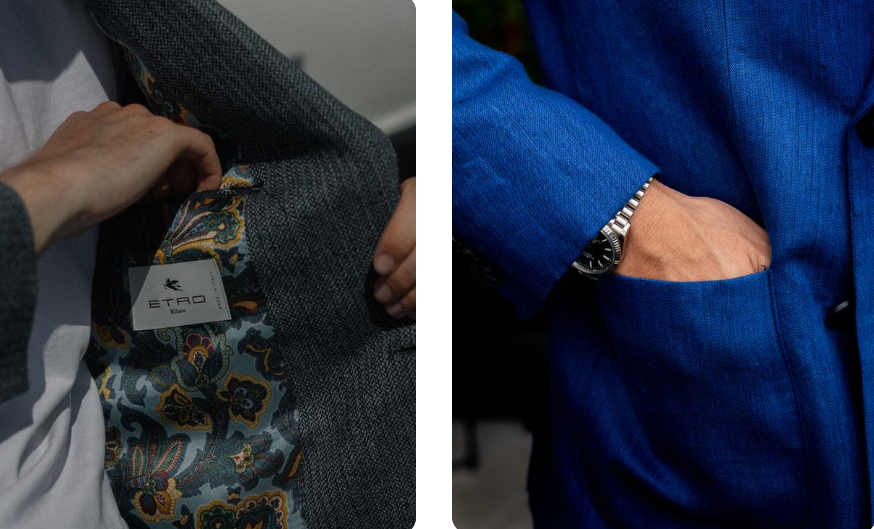
My first blazer was made from a soft fabric that collapsed after sitting.
The shoulders lost definition, the back wrinkled and the lapels curled outward. It looked impressive for ten minutes and tired after two hours.
I began looking for enough structure to hold the shape without becoming stiff. I also checked whether the lining allowed the blazer to slide over shirts and knitwear.
The FTC’s clothing care-labelling rules require regular care instructions and relevant warnings. Those labels helped me identify whether a work jacket would require expensive maintenance or tolerate regular use.
WRAP’s work on durable clothing design also reinforces that fabric, construction and care affect how long a garment remains useful.
The office-siren blazer finally worked when I stopped styling it as a complete character.
I kept the strong shoulder, dark colour and clean line. I removed the parts that interfered with movement or made me feel over-dressed.
The result was less exact to the trend and much more convincing in the office.