





My first beta-glucan product spent four months unopened in a drawer.
Beta glucan for skin is becoming popular in barrier-focused skincare because it can help support hydration and soothe dry, uncomfortable skin. It is commonly found in serums and moisturisers designed for sensitive or moisture-depleted skin, making it a useful ingredient to consider when your routine needs more barrier support.
I had received it during a period when my skin was already irritated, but the plain bottle and unfamiliar ingredient did not compete well with the more recognisable products on my shelf. Hyaluronic acid sounded hydrating. Ceramides sounded reparative. Peptides sounded advanced.
Beta glucan sounded like something listed on a cereal packet.
I ignored it until a cold week when the skin around my mouth became so dry that my normal moisturiser stung. I had already made the situation worse by applying an exfoliating toner to remove the visible flakes.
With nothing glamorous left to try, I opened the beta-glucan serum.
That was the moment I realised how easily ingredient trends can determine what I consider credible before I understand what an ingredient is.
The Product Worked Best When I Stopped Demanding Drama

The serum did not create an immediate glassy finish. It felt slightly cushiony, absorbed without burning and left no memorable scent.
After several days, the main change was that I stopped thinking about my skin every hour.
The area around my mouth felt less tight, and my moisturiser no longer caught on rough patches. That experience made beta glucan interesting to me, but it did not prove that the ingredient alone caused the change. I had also stopped exfoliating and simplified the rest of my routine.
A 2025 review examining beta glucan in skincare describes potential moisturising, antioxidant, anti-inflammatory and barrier-supporting effects. It also notes that beta glucan’s activity can vary according to its source, structure and physical properties.
That final point mattered. “Beta glucan” on a label does not tell the whole formulation story.
Beta Glucan Does Not Come From One Source
Beta glucans are polysaccharides found in sources including oats, yeast, mushrooms, algae and other organisms. Their structures are not identical, so it is too simple to treat every beta-glucan extract as functionally interchangeable.
A separate review of beta-glucan extracts and skin health discusses how source, extraction and modification can influence their properties. It also describes soothing and antioxidant potential while recognising that commercial applications require appropriate formulation.
That helped me become more careful with product descriptions.
I wanted to know whether the brand identified the beta-glucan source, whether the product had been tested as a finished formula and whether the ingredient was being used primarily as a humectant, soothing addition or headline claim.
This was where 1.Anchor became useful in my assessment. It gave me a reason to compare formula transparency and realistic use rather than simply choosing the product with the largest beta-glucan percentage printed on the front.
Oats Helped Me Understand the Ingredient’s Appeal
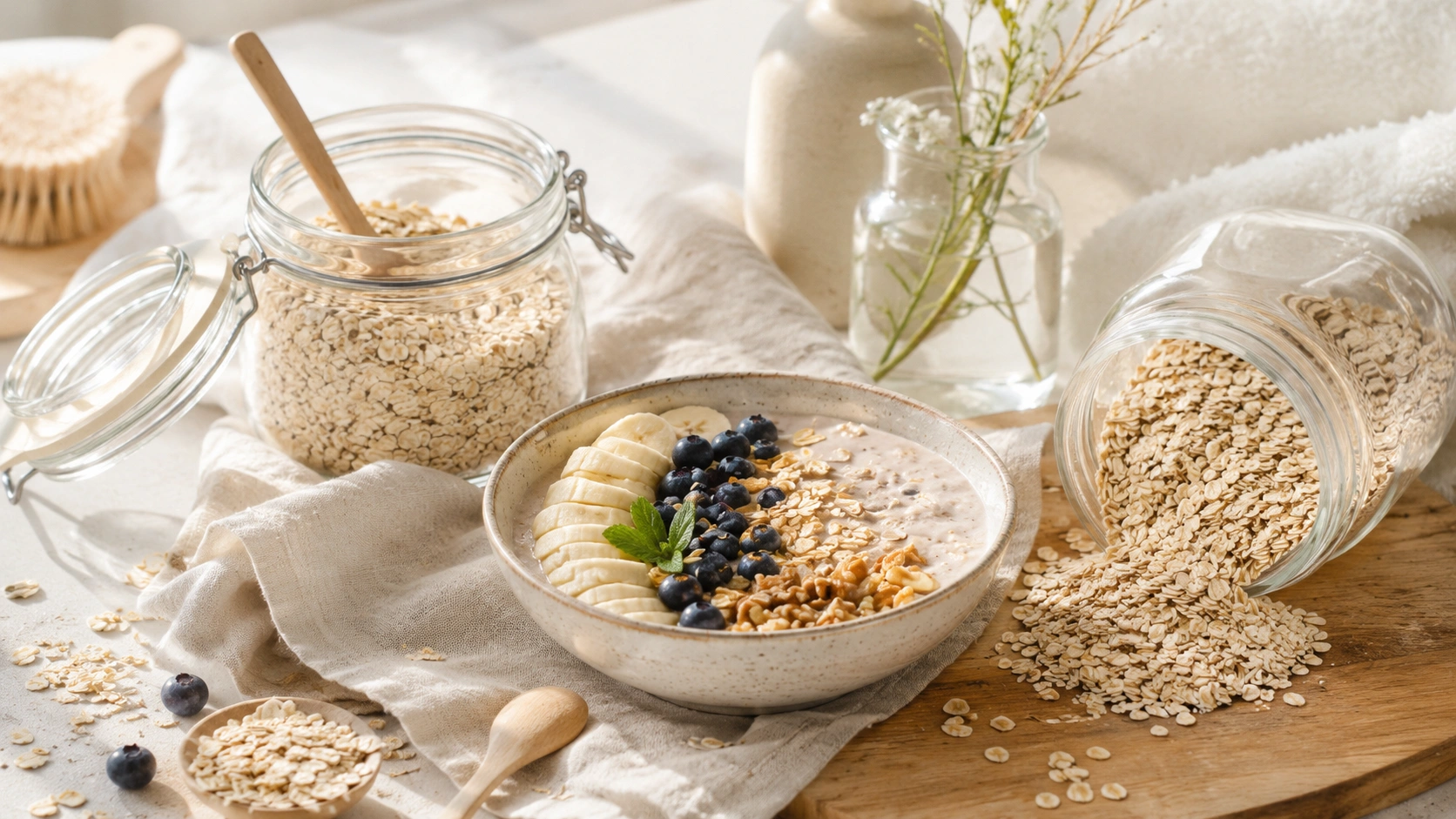
I had already used colloidal-oatmeal creams for dry body skin without connecting them to beta glucan.
A review of the chemistry and clinical properties of colloidal oatmeal explains that oat starches and beta glucan contribute to water-holding and protective functions. Oats also contain other components, so the effect of a complete oatmeal formulation should not be reduced to one ingredient.
That was another useful correction to ingredient-led thinking.
Sometimes a product works because several parts of the formula cooperate. Extracting one fashionable component from that story may be useful for marketing, but it does not necessarily explain the entire performance.
I Had Been Treating Barrier Repair Like a Race
Before trying beta glucan properly, my repair strategy involved switching products every few days.
If a moisturiser did not remove all redness overnight, I replaced it. If a serum did not create immediate softness, I layered another one over it. I never gave a simple routine enough time to become informative.
The AAD’s advice on caring for dry and easily irritated skin recommends gentle cleansing, warm rather than hot water and applying fragrance-free moisturiser while the skin is still slightly damp. Those steps are not exclusive to beta glucan, but they created the conditions in which I could judge the serum fairly.
A broader review of skin-barrier function and moisturisation also helped me understand that moisturisers can reduce water loss and support the outer layer through several complementary mechanisms. Beta glucan may contribute to a formula, but a serum does not remove the need for an appropriate moisturiser.
A Soothing Ingredient Can Still Sit Inside an Irritating Formula
One product I tested later contained beta glucan, essential oils and fragrance.
It made my face itchy.
At first, I thought this contradicted everything I had read. In reality, it showed why the hero ingredient cannot be separated from its base formula.
The FDA lists fragrances and preservatives among the common categories of cosmetic allergens. It also explains that certain fragrance components may cause sensitivities in some users, even though those ingredients may be tolerated by many others.
A product can contain a soothing ingredient and still be unsuitable for a particular person.
That lesson now shapes how I shop. I do not assume the presence of beta glucan cancels everything else in the ingredient list.
Why I Still Keep It in My Routine
Beta glucan became useful precisely because I stopped expecting it to transform my face.
I use it when I want additional hydration and a comfortable layer beneath moisturiser. I value products that absorb cleanly, do not add fragrance and do not require me to restructure the rest of my routine.
I do not treat it as a cure for eczema, rosacea, dermatitis or unexplained persistent redness. Those concerns can require professional diagnosis and treatment. Cosmetic barrier support has limits.
The trend has nevertheless corrected one of my old shopping habits. I used to associate effectiveness with tingling, peeling and rapid visible change. Beta glucan reminded me that a product can be useful because it makes skin less eventful.
For an irritated barrier, quiet performance is often the performance I should have been looking for all along.