



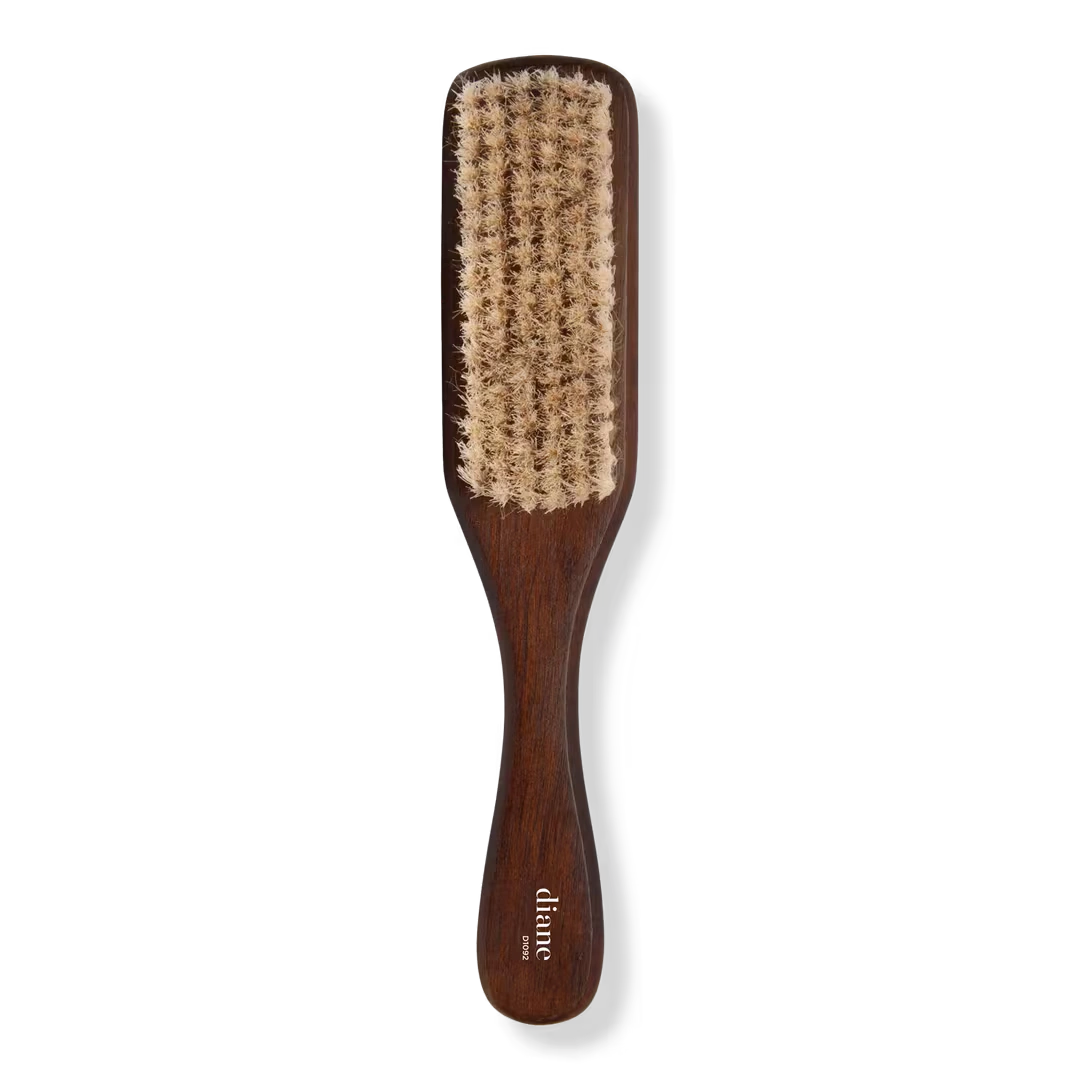
The Diane Oak Wood 100% Boar Styling Brush is a soft-bristle grooming brush designed for smoothing, shaping, polishing, and distributing natural scalp oils through the hair. It combines 100% soft boar bristles with a solid oak wood handle, creating a simple styling tool particularly suited to fine or thinning hair and controlled finishing work. Diane also positions the brush for men’s grooming, beard shaping, facial-hair smoothing, and maintaining textured wave styles.
Rather than functioning as an aggressive detangling brush, its strongest role is finishing. The soft, closely arranged natural bristles can smooth the hair surface, organize shorter strands, tame flyaways, and help create a more polished appearance without the pins or rigid teeth found on many conventional brushes.
About Oak Wood 100% Boar Styling Brush
Oak Wood 100% Boar Styling Brush keeps its construction deliberately straightforward. The brush head contains 100% natural boar hair, while the handle is made from solid oak wood. Diane describes the bristles as soft enough for fine and thinning hair and says they can distribute the hair’s natural oils along the strand for a smoother, softer finish.
The brush is especially useful when the hair is already detangled and the goal is to refine the finished style. It can help smooth short hairstyles, polish the surface of longer hair, guide hair into a slicked-back style, shape facial hair, or maintain waves.
Because it uses real boar hair rather than synthetic fibers, this is not a vegan hair brush.
Oak Wood 100% Boar Styling Brush Features
The defining feature is the combination of soft natural bristles and a solid wooden body. Diane specifically highlights four characteristics: 100% soft boar bristles, suitability for men’s grooming, a solid oak handle, and gentle styling for fine or thinning hair.
The softer bristle profile also separates it from stiff wave brushes or mixed boar-and-nylon brushes. Someone looking primarily for strong penetration through very dense hair may need a firmer or mixed-bristle tool, while this version makes more sense when smoothing and surface control are the priorities.
100% Soft Boar Bristles
Natural boar bristles are the central styling element.
Unlike rigid plastic pins, these bristles bend as they move over the hair. Diane specifically positions their softness as appropriate for fine or thinning hair, where aggressive tugging may be undesirable.
That matches broader dermatologist advice about gentle grooming. The American Academy of Dermatology’s hair-loss care guidance recommends brushing or combing gently and only as much as necessary for styling because excessive tugging can contribute to further hair damage.
A soft brush does not make pulling harmless, however. Technique still matters. If the brush repeatedly catches on knots, the hair should be detangled appropriately before continuing.
Distributing Natural Hair Oils
Diane describes the boar bristles as helping move natural scalp oils along the hair strand.
This is most noticeable when the brush is used on dry, already-detangled hair. As the bristles move from the root area toward the ends, they can help spread some surface oil rather than leaving it concentrated around the scalp.
For fine or straight hair, this may create a smoother, more polished appearance through the lengths.
It is important not to overstate this effect. Brushing does not replace shampoo, conditioner, or other appropriate hair care. The AAD’s healthy hair recommendations emphasize washing according to scalp and hair needs, conditioning after shampooing, and using gentle grooming practices.
The brush is therefore best considered a styling tool, not a substitute for cleansing or conditioning.
A Useful Finishing Brush For Fine Hair
Fine hair is one of the clearest matches for this brush.
Because the bristles are soft, they can smooth the outer surface without requiring the stiff resistance of a heavy detangling brush. This makes the Diane brush useful for controlling wispy sections, short flyaways, side sections, and other areas that need refinement after the main styling work is finished.
Diane also specifically identifies the brush as gentle on thinning hair.
Dermatologists similarly recommend softer styling tools when hair is fragile. The AAD’s guidance for people experiencing alopecia notes that soft-bristled brushes are less likely to pull strongly on the hair during styling.
This does not mean the brush treats thinning or encourages new hair growth. Its benefit is simply gentler styling.
Smoothing Slicked-Back Styles
The brush can also be useful when creating slicked-back ponytails, buns, or short hairstyles.
Diane has specifically confirmed that the Oak Wood 100% Boar Styling Brush can be used for slick-back styling and says its soft bristles can smooth various hair textures when used for finishing rather than detangling.
A small amount of appropriate styling product can be applied before brushing the surface into place. The closely arranged bristles can then gather short strands and soften visible bumps.
Keep the finished style comfortable. Repeatedly pulling hair into very tight ponytails, buns, braids, or other high-tension styles can contribute to traction-related hair loss. The American Academy of Dermatology’s guidance on hairstyles that pull recommends reducing tension, particularly around the hairline.
The aim should be smooth hair, not maximum tension.
Wave Styling And Short Textured Hair
Although the soft bristles are especially suited to fine hair, Diane also notes that the brush is used on textured men’s hair for forming and maintaining wave styles.
For this purpose, the brushing pattern and consistency of direction matter more than aggressive pressure.
The brush can help guide short hair into a uniform pattern while smoothing the surface. Because the bristles are soft, this model offers a gentler option than very firm wave brushes.
Hair texture still affects which brush works best. Someone with very dense or coarse hair may prefer firmer bristles for deeper penetration, while this soft-boar design is more naturally suited to surface styling and refinement.
Styling Longer Hair
The brush is marketed primarily around men’s grooming, but its construction does not limit it to one gender or one haircut.
It can also be used as a finishing brush on longer straight or gently textured hair once major tangles have already been removed.
Begin with an appropriate detangling tool if necessary, then use the boar brush to smooth the surface and organize flyaways.
The AAD recommends a wide-tooth comb for detangling wet hair, noting that hair can be particularly vulnerable when wet.
That makes the Oak Wood Boar Styling Brush better suited to controlled finishing than forceful wet detangling.
Curly And Coily Hair Need A Different Approach
Boar brushes can have a role in curly and coily routines, but the technique needs to match the hair.
Diane states that this brush can be used as a smoothing tool across different textures, even though its detangling role is better suited to thinner, finer hair.
For curls, the brush may be useful around the hairline or for smoothing the exterior of a bun, ponytail, or other controlled style.
It is generally not the best choice for brushing through dry curls from roots to ends when curl definition is meant to remain intact.
The AAD’s curly-hair guidance recommends careful detangling in sections and warns that unnecessary dry brushing can contribute to breakage and frizz in curly hair.
Using this brush strategically for surface smoothing rather than complete detangling is therefore the more sensible approach for many curly textures.
Solid Oak Wood Handle
The handle is made from solid oak wood, giving the brush a more traditional appearance than plastic grooming tools.
Diane describes the handle as both comfortable and durable.
The natural wood also gives the brush a substantial feel in the hand while maintaining a simple, understated grooming aesthetic.
Because this is genuine wood, care should differ from the way an all-plastic brush might be treated. Repeated soaking can be hard on natural wood finishes, so routine cleaning should focus on the bristles rather than leaving the complete brush submerged in water.
Diane has also stated that the oak handle has a varnish finish.
Beard And Facial Hair Grooming
Diane specifically recommends the brush for smoothing and shaping beard and facial hair as well as scalp hair.
The soft bristles can help direct shorter facial hairs into a more consistent position and distribute naturally occurring oils through the beard.
It is most useful for finishing and shaping rather than pulling through severe tangles.
Pressure should remain gentle, especially because facial skin can be more sensitive than the scalp. If the bristles create persistent irritation, redness, or discomfort, discontinue use on that area.
Keeping a beard brush clean is also important because it comes into regular contact with skin oils, dead skin, grooming products, and facial hair.
Gentle Brushing Matters More Than Brush Count
There is no need to brush the hair dozens or hundreds of times simply because the bristles are soft.
The idea that hair needs 100 brush strokes a day is not supported by dermatologist advice. The AAD recommends limiting brushing to what is necessary for styling and avoiding unnecessary pulling or repeated mechanical stress.
With the Oak Wood Boar Styling Brush, a few controlled passes are usually more useful than repeatedly brushing the same section.
This is particularly important for fragile, bleached, chemically treated, or thinning hair.
Cleaning The Boar Bristles
Hair and product residue gradually become trapped between natural bristles.
Remove loose strands from the brush regularly using fingers or an appropriate brush-cleaning tool. Product buildup around the base of the bristles should also be cleared before it becomes difficult to remove.
Because the handle is solid oak, avoid prolonged soaking.
When washing is necessary, keep moisture focused on the bristle area, use a small amount of gentle cleanser, and avoid saturating the wooden handle. Remove excess moisture and allow the brush to dry thoroughly in a ventilated place.
Do not use the brush while the wood remains heavily wet.
Regular cleaning becomes particularly important if pomades, gels, creams, beard products, or styling waxes are frequently used.
Keep Personal Brushes Personal
A hairbrush is best treated as a personal grooming item rather than something routinely shared.
The CDC’s hair and scalp hygiene guidance advises against sharing combs and brushes because shared grooming items can sometimes contribute to the spread of conditions such as head lice.
This is particularly relevant in households, locker rooms, barbershop environments, and shared grooming spaces.
If the brush is used professionally on multiple people, appropriate professional cleaning and sanitation procedures should be followed between clients.
Choosing This Brush For The Right Job
The Oak Wood 100% Boar Styling Brush makes the most sense as a finishing and smoothing brush.
Use another suitable tool first if hair is heavily tangled. Once the hair is manageable, this brush can polish the surface, guide shorter hairs into place, distribute some natural oil along the strand, refine slick styles, or shape facial hair.
That distinction is important because trying to force soft natural bristles through difficult knots can create unnecessary pulling without taking advantage of what this brush does best.
For Erothots shoppers choosing between brush types, this model is strongest when softness, surface control, and traditional grooming are more important than aggressive detangling.
Final Note
Diane Oak Wood 100% Boar Styling Brush is a simple tool with a clearly defined purpose. Its 100% soft boar bristles are intended for gentle smoothing, particularly on fine or thinning hair, while the solid oak wood handle provides a durable traditional construction.
The brush also has useful versatility. Diane recommends it for men’s hairstyling, wave maintenance, slicked-back looks, and beard or facial-hair grooming.
Its greatest value comes from using it as a finishing brush rather than expecting it to replace a wide-tooth comb or dedicated detangling brush. Used gently on already manageable hair, it offers controlled smoothing and a softer, more polished finish without complicated styling technology.
Reviews
There are no reviews yet.