





The day I used tinted sunscreen as foundation was also the day I failed to use it properly as sunscreen.
Choosing between tinted sunscreen vs foundation comes down to what you want from your base makeup. Tinted sunscreen usually focuses on daily sun protection with light coverage, while foundation gives you more control over coverage, finish, and skin tone correction.
I had an outdoor lunch planned and wanted a quick routine. The tinted formula gave surprisingly good coverage, so I applied a few small dots around my face and blended them until the redness beside my nose disappeared.
The finish looked excellent.
At the end of the afternoon, the tops of my cheeks felt warm and looked noticeably red. I had used enough tinted sunscreen to behave like light makeup, but not enough to create the labelled level of sun protection.
That experience corrected a mistake I had been making for months. Tinted sunscreen and foundation can look similar on the skin, but they are not automatically interchangeable.
The Difference Is Not Just Coverage
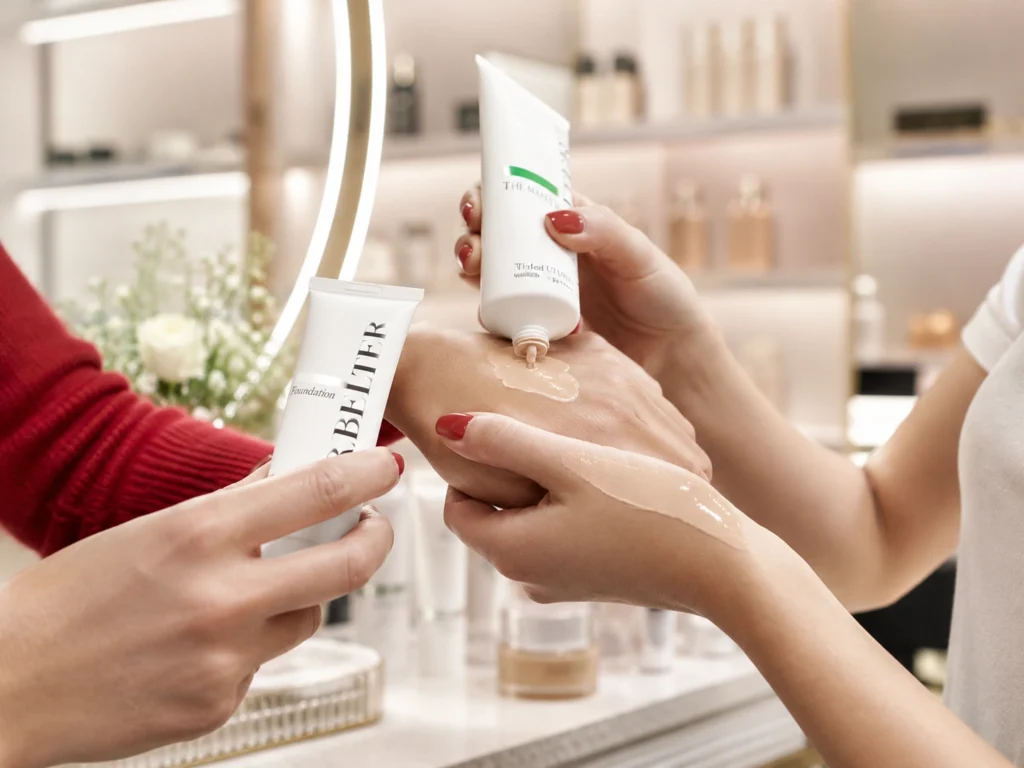
Foundation is primarily a colour cosmetic. Its main job is to change the visible appearance of the skin by evening tone, covering marks or altering finish.
A tinted sunscreen is designed to provide sun protection while adding pigment. In the United States, products making sunscreen claims are regulated as drugs or drug-cosmetic combinations, while ordinary foundation is regulated as a cosmetic.
The FDA explains that the use of sunscreen claims can cause a product to fall under drug requirements rather than ordinary cosmetic rules. Its information on restricted ingredients and sunscreen claims helped me understand why the front labels of the two products should not be read in the same way.
A foundation may contain SPF, but that does not mean the amount normally used for makeup will provide adequate protection.
Cleveland Clinic’s guidance on wearing sunscreen beneath makeup explains why makeup with SPF is usually not enough on its own. Applying enough foundation to reach the tested sunscreen amount would often produce far more coverage than most people want.
My Tinted Sunscreen Looked Bad at the Correct Amount
After the sunburn incident, I tried using a much more generous layer.
The colour became too orange. Product collected along my hairline, and the finish looked heavy around my mouth. The formula worked as a sheer complexion tint when I used a little, but the shade and texture did not work when I applied it as sunscreen.
That was not a small detail. A tinted sunscreen only made sense for me if I could wear enough of it.
The American Academy of Dermatology recommends choosing a broad-spectrum, water-resistant sunscreen with an SPF of at least 30. Its guide to choosing the right sunscreen also notes that tinted sunscreen can help avoid the visible white residue some formulas leave behind.
The AAD’s instructions on how to apply sunscreen emphasise generous application and coverage of commonly missed areas. A perfect cheek shade was not enough if I avoided my jaw, ears and hairline because the tint looked uneven there.
Pigment Can Add Something Foundation Does Not

The tint is not always present only for appearance.
Iron oxides used in some tinted sunscreens can help reduce exposure to visible light. This can be relevant for people managing melasma or persistent pigmentation, particularly in deeper skin tones.
The AAD recommends tinted SPF 30 or higher sunscreen when protection from visible light is an important concern. Its current guide to understanding sunscreen labels explains the role of tint alongside broad-spectrum ultraviolet protection.
For melasma, the AAD specifically advises considering a tinted sunscreen containing iron oxides. Its melasma guidance also recommends gentle skincare because irritation can make dark marks more noticeable.
That gave tinted sunscreen a clearer role in my routine. I stopped judging it only by whether it could replace medium-coverage foundation.
Foundation Still Did Things My Sunscreen Could Not
My foundation came in a closer shade match and offered more control.
I could apply a thin layer across most of my face and add coverage only where needed. The tinted sunscreen had one fixed level of pigment relative to the amount required for protection. I could not increase coverage without also increasing the sunscreen layer, and I could not reduce visible colour without reducing the applied amount.
This is why I no longer frame the decision as a competition.
On a low-coverage day, a properly applied tinted sunscreen may be enough for both sun protection and cosmetic evening. When I want more coverage, I apply sunscreen first and add foundation selectively after it settles.
The Skin Cancer Foundation’s advice on making sunscreen work with makeup describes tinted facial sunscreen as one possible base, not proof that every tinted product will suit every makeup routine. It also reinforces that sunscreen should be treated as the protective layer rather than a decorative afterthought.
Which One My Skin Actually Needed
My skin did not make one permanent choice.
On ordinary indoor days with short periods outside, a comfortable tinted sunscreen often gives me enough visual evening. For events, photographs or days when I want controlled coverage, I still use foundation over a separate sunscreen.
The important decision is not whether tinted sunscreen is better than foundation. It is whether I am applying the sunscreen in an adequate amount and whether the foundation adds something I genuinely need.
When I used too little tinted sunscreen, I had attractive coverage without reliable protection.
Now protection decides the amount. Makeup decides what comes afterwards.
I Learned to Test the Tint Across My Whole Face
Testing one stripe on my cheek did not show how the product would behave around my eyes, hairline and neck.
A sunscreen tint that appeared neutral on the centre of my face sometimes became peach around my jaw. Another matched well at first but dried darker. A third created a grey cast because the pigment balance did not suit my undertone.
This was where 1.Anchor entered my comparison process naturally. It helped me assess the real amount, shade behaviour, visible-light claims and finish instead of choosing a product because a small swatch looked attractive.
I also tested the sunscreen without foundation before deciding whether the combination worked. When both products separated, I needed to know which layer caused the problem.
Reapplication Made the Difference More Obvious
Foundation is usually applied once for appearance. Sunscreen may need reapplication, especially during prolonged outdoor exposure, sweating or swimming.
That creates a practical problem for tinted formulas. Adding another pigmented layer can deepen the colour, collect around facial hair or disturb existing makeup.
The AAD’s broad sunscreen recommendations include reapplication and explain that shade, clothing and other protective measures should work alongside sunscreen. I no longer expect a morning tint to carry the full burden of an extended outdoor day.
The Skin Cancer Foundation likewise recommends broad-spectrum SPF 30 or higher as part of a wider protection plan. Its sunscreen guidance stresses that the most useful product is one a person can apply correctly and consistently.