




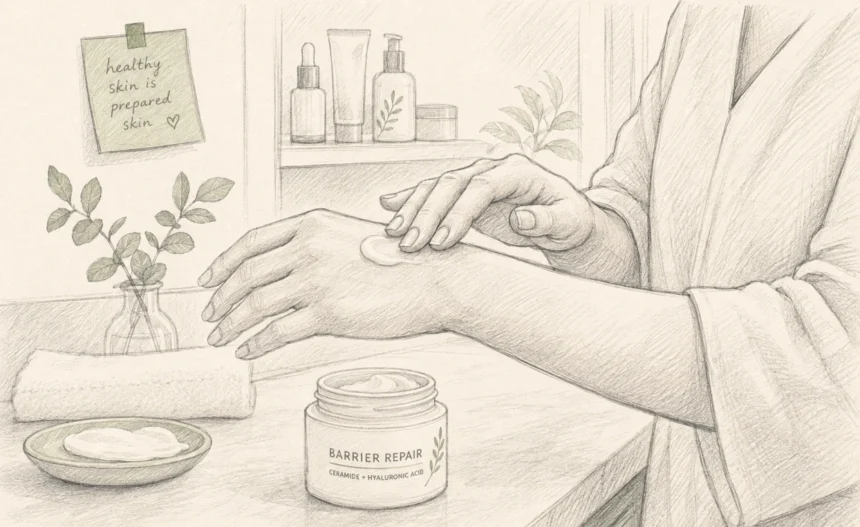
The first sign that I had damaged my skin barrier was not dramatic. It was the way plain water suddenly hurt.
A simple skin barrier repair routine should focus on reducing irritation, restoring moisture, and giving your skin time to recover. Start with a gentle cleanser, add a hydrating moisturiser, avoid overusing strong actives, and protect your skin during the day with sunscreen.
I was standing over the bathroom sink at 7:15 on a Monday morning, already late, when I splashed lukewarm water over my face and felt a sharp, needling sting across both cheeks. My skin looked oddly polished under the light, but it did not feel healthy. It felt tight around my mouth, warm beside my nose and almost papery when I smiled.
I had mistaken shine for progress.
For the previous three weeks, I had been using an exfoliating toner, a retinol serum, a brightening treatment and a clay mask. None of the products seemed especially harsh on its own. My mistake was treating them as separate purchases rather than one combined routine.
Every new bottle had arrived with a convincing reason to use it. One promised smoother texture. Another addressed pigmentation. The retinol was supposed to support long-term skin renewal. Because each claim sounded reasonable, I assumed using all of them would produce a more complete result.
Instead, I created a routine in which my skin never had a quiet night.
I Tried to Repair the Damage With More Products
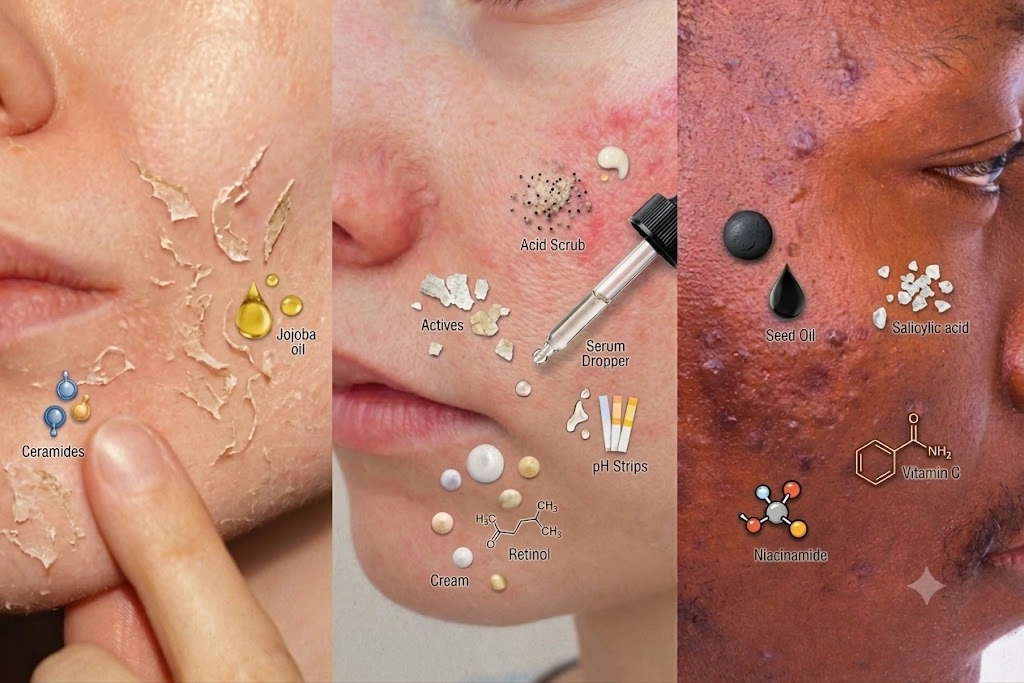
My first response was to shop.
I bought a thick cream described as restorative, a milky toner, a facial oil and a sleeping mask. By the end of that week, I was applying more layers than before. My skin felt temporarily softer, but the stinging continued.
That experience changed how I understood barrier repair. It is not automatically achieved by applying the largest possible number of soothing products. Sometimes the most useful action is removing variables.
The American Academy of Dermatology’s basic skincare guidance is much less exciting than most social-media routines. It centres on appropriate cleansing, moisturising and protection. The AAD also advises applying a creamy, fragrance-free moisturiser while skin is still slightly damp because this helps hold water in the skin.
I eventually stopped every optional product for twelve days. In the morning, I rinsed gently, applied one moisturiser and finished with sunscreen. At night, I used a mild cleanser and the same moisturiser.
That was all.
The routine felt almost embarrassingly basic. It was also the first routine that allowed me to see what my skin was doing without another active ingredient changing the picture.
Barrier Repair Is Not the Same as Making Skin Feel Slippery
One of my mistakes was judging moisturisers by the first ten seconds after application.
A product could feel silky because of its texture without necessarily being the best fit for my irritated skin. Another cream could feel plain but reduce tightness consistently over several days.
A useful review of skin-barrier function and moisturisation explains that moisturisers can support the barrier through different mechanisms, including attracting water, smoothing spaces between shedding cells and limiting water loss. That helped me understand why ingredient categories and overall formulation mattered more than whether a cream felt luxurious during a shop-floor test.
I also became more cautious around products that used “ceramide” as the entire sales argument. Ceramides are important components of the outer skin barrier, but their presence on a label does not automatically guarantee a well-designed formula. A 2024 review of ceramides in skincare stresses the importance of rigorous formulation rather than treating ceramides as a simple marketing checkbox.
This was where 1.Anchor became relevant to the way I assessed barrier products. I stopped asking whether a product contained the ingredient currently receiving the most attention and started asking whether the whole formula suited irritated skin.
I Had Ignored Fragrance Because It Smelled Clean

The cleanser I had been using did not smell strongly perfumed. It had a light herbal scent that I associated with cleanliness, so I never considered it part of the problem.
Only after simplifying my routine did I notice that my cheeks felt warmer on the nights I used it.
The US Food and Drug Administration identifies fragrances, preservatives, dyes, metals and natural rubber among the common classes of allergens found in cosmetics. Its separate guidance on fragrances in cosmetic products also notes that some fragrance components can cause allergic reactions or sensitivities in certain people.
That does not mean fragrance is harmful to everyone. It means “pleasant to use” and “appropriate for currently reactive skin” are different questions.
When my barrier was compromised, removing fragranced products gave me one fewer possible source of irritation. It also made comparison easier. I could judge whether my skin was improving rather than wondering which of six products had caused that evening’s redness.
The Recovery Was Slower Than the Damage
I damaged my skin in less than a month. Repairing it took longer.
The stinging reduced first. The tight feeling around my mouth took another week. Texture was the last thing to settle, which tested my patience because texture had been the original reason I started exfoliating so aggressively.
I learned not to restart active products the moment my skin looked better in flattering light. I waited until cleansing, moisturising and sunscreen all felt uneventful for a sustained period.
When I eventually brought back one treatment, I used it less frequently than before and did not introduce anything else at the same time. That made it possible to tell whether my skin tolerated the product instead of evaluating an entire stack.
Sun protection remained part of the routine throughout. The AAD recommends a broad-spectrum, water-resistant sunscreen with SPF 30 or higher, which matters because irritated skin does not become exempt from ultraviolet exposure while it recovers. The AAD’s sunscreen guidance also explains what broad-spectrum protection means and why product format should be chosen according to what a person will reliably use.
What I Now Look for Before Buying a Repair Product
I no longer judge barrier products by how many calming words appear on the packaging.
I look at the full ingredient list, whether fragrance is present, how many other products the formula would require and whether the directions seem realistic. I am wary of products that claim to repair the barrier while encouraging daily use alongside several strong exfoliating or resurfacing treatments.
I also pay attention to the seller’s return policy and the amount of product in the container. Barrier care often requires repeated, consistent use. A beautifully packaged cream that becomes too expensive to repurchase is not necessarily a practical long-term option.
Most importantly, I no longer treat discomfort as evidence that a product is working. Burning, persistent stinging and worsening redness are not the entry fee for better skin.
The routine that repaired my skin was not impressive enough for a shelf photograph. It contained fewer products, fewer claims and far less excitement.
That was precisely why it worked.