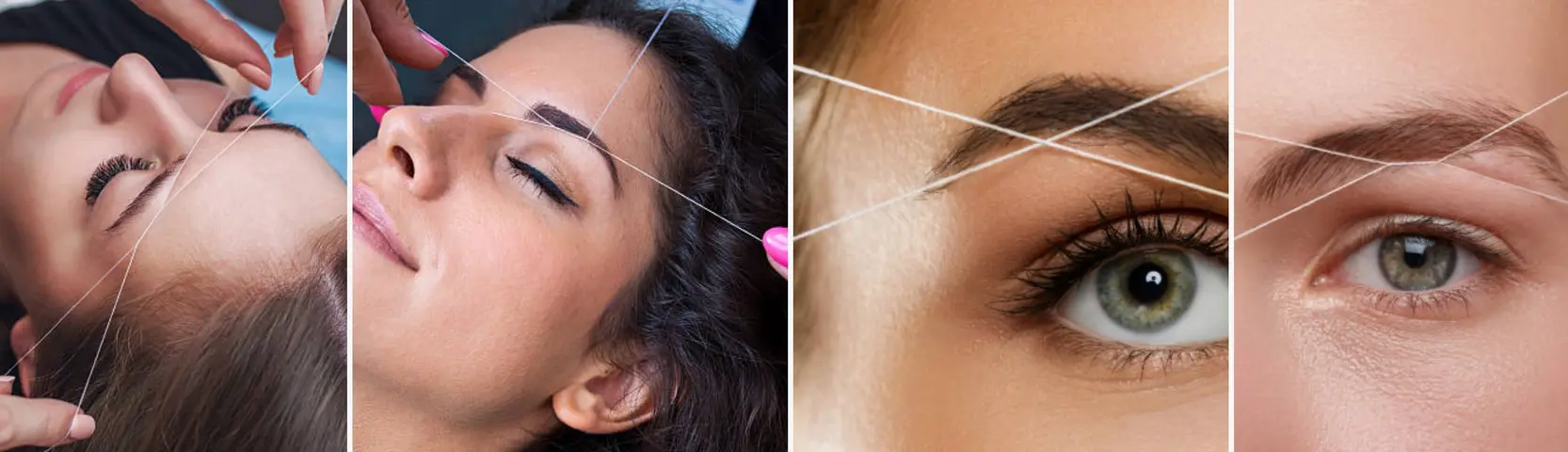
A single length of cotton thread is doubled, tied into a loop and twisted in the middle. That twist is the whole tool. As the therapist opens and closes their hands, the twist travels along the thread, and every hair it passes over gets caught in it and lifted straight out of the follicle.
It works like a row of tiny lassos moving across the skin. That is why threading takes out a clean line of hair in one movement while tweezers manage one at a time, and why the edge it leaves is so much sharper than wax can produce.
Two things follow from this that matter more than they sound. Because the thread only ever touches hair, no product, heat or adhesive goes anywhere near your skin. And because the twist catches hair as short as one or two millimetres, it picks up the fine hairs that wax slides over and tweezers cannot grip.
- 01Removed at the follicle. Not broken at the surface. That is why regrowth takes four to five weeks rather than the ten days a razor buys you.
- 02Finer regrowth over time. Repeated removal from the root gradually weakens the follicle, so hair comes back softer and sparser after several appointments.
- 03No product on the skin. Nothing to react to, which means no patch test and no allergy risk from the treatment itself.
- 04No lifting of the skin. Wax bonds to the surface layer and takes some of it away. Thread cannot, because it never makes contact.
- 05Works on very short hair. One to two millimetres is enough. Waxing generally needs five, which means growing it out first.
- 06Precision at the arch. Row by row, so a single line can be taken rather than a block. This is where threading beats every other method.
The thread only ever touches the hair. Everything good about this treatment follows from that.