




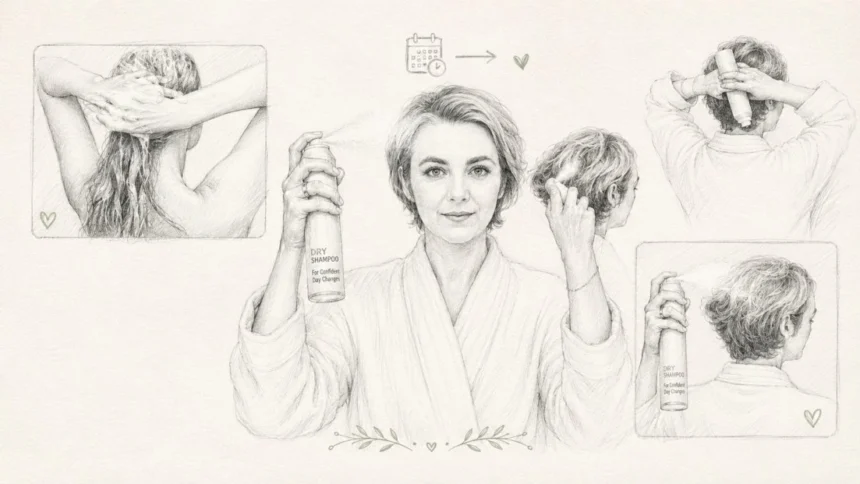
The morning I realized I had pushed dry shampoo too far, my hair actually looked fine.
That was the confusing part.
The best dry shampoo tips are less about spraying more product and more about using the right amount in the right places. Apply it mainly to oily roots, give it time to absorb, and brush or massage it through so your hair looks fresher without feeling coated or chalky.
I had sprayed the roots before bed for the third night in a row, brushed through the white residue in the morning and added another small amount around my hairline. From a normal distance, my hair looked freshly styled. The roots were matte, there was enough volume around the crown, and I had successfully avoided washing it before work.
Then I scratched the back of my head.
My fingernail came away with a waxy mixture of oil and powder. The skin underneath felt tender, and later that afternoon I noticed small flakes collecting around my part.
I had spent the week congratulating myself for extending my wash days when I had really been extending the time between actual scalp cleanses.
That was the mistake that changed how I use dry shampoo.
I still think it is one of the most useful products in my hair routine. I just no longer treat it as shampoo.
I Had Confused Looking Clean With Being Clean
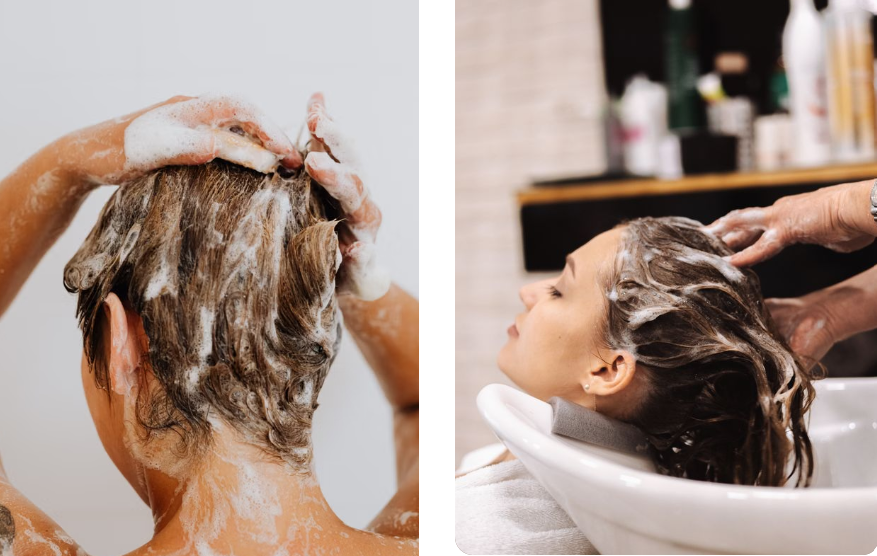
Dry shampoo produces an unusually convincing illusion.
The roots lose their greasy shine, individual strands separate again, and the hair often gains enough texture to look freshly styled. Because the visual change can happen within minutes, I assumed the product had effectively cleaned my hair.
It had not.
The American Academy of Dermatology explains in its dermatologist guidance on dry shampoo that dry shampoo absorbs oil rather than actually cleaning the scalp. Regular shampoo and water remove accumulated oil, dead skin cells, microorganisms and dry-shampoo residue.
Cleveland Clinic makes the same distinction in its explanation of what dry shampoo actually does. The product can make greasy hair appear fresher, but it does not perform the same cleansing job as washing with water.
That distinction sounds obvious now.
It was much less obvious when my roots looked good enough to postpone another wash.
I Had Turned an Emergency Product Into My Main Routine
Dry shampoo originally lived in the back of my bathroom cupboard.
I used it occasionally when I needed to leave early, after a particularly warm day or when my hair became oily sooner than expected.
Then it became part of my schedule.
Wash Sunday. Dry shampoo Tuesday. More on Wednesday. Maybe another application Thursday if the hair still looked presentable.
My routine was no longer based on what my scalp needed. It was based on how many days I could make the hairstyle survive.
The AAD recommends using dry shampoo sparingly and washing with regular shampoo and water after one or two dry-shampoo applications. Its dermatologists specifically warn that allowing dry shampoo to repeatedly accumulate can contribute to problems such as breakage and shedding.
Once I read that, I stopped measuring success by the number printed on my wash-day calendar.
Five days between washes was not automatically better than three.
A wash schedule only made sense if my scalp remained comfortable.
Extending Wash Day Needed a Reason
I had absorbed the idea that washing hair less frequently was automatically healthier.
That is too simple.
Hair texture, scalp oil production, styling practices and individual needs can all influence a sensible washing schedule. Cleveland Clinic’s current guidance on how often hair should be washed emphasizes that there is no single schedule for everyone. It also describes dry shampoo as a tool for absorbing excess oil between washes rather than a replacement for traditional shampoo.
Research examining wash frequency and scalp condition has also challenged the idea that frequent washing is inherently damaging. In that study population, higher shampoo frequency was associated with better scalp and hair satisfaction, and the investigators did not observe objective hair damage from the frequent washing regimen they tested.
I would not use that study to prescribe daily washing for everyone.
I use it to question the rule I had created for myself.
If my scalp becomes uncomfortable on day three, forcing it to reach day six is not a beauty achievement.
The Best Time to Apply Dry Shampoo Was Earlier Than I Thought
I used to wait until the roots looked visibly greasy.
Then I applied a large amount and expected the powder to reverse two days of oil accumulation immediately.
That usually produced heavy, chalky roots.
I got better results when I used a smaller amount before the hair reached that stage.
Sometimes that meant applying it on the evening when I noticed the first slight increase in oil rather than waiting for the following morning. The powder had time to absorb oil while I slept, and I usually needed less product overall.
That was not a rule that everyone had to follow. It simply solved the problem I had created by using too much at once.
The AAD recommends applying dry shampoo only where the hair is oily rather than coating the entire head.
That became one of the most important changes in my routine.
My dry ends did not need dry shampoo just because my scalp produced oil.
I Had Been Spraying Far Too Close
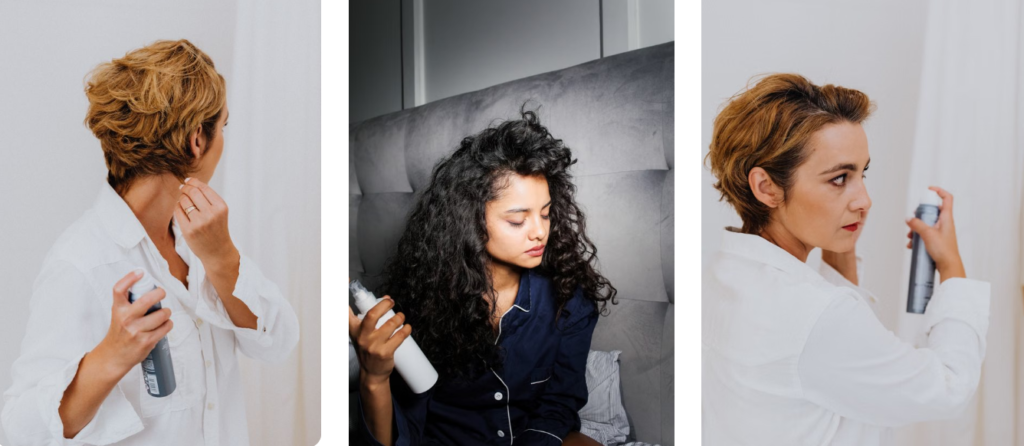
My old application technique was essentially point-blank.
I lifted a section, placed the aerosol can a few inches from my scalp and sprayed until I could see a white patch.
That gave me immediate confirmation that product had landed there.
It also gave me concentrated buildup.
Following the product instructions and maintaining the recommended spraying distance created a much finer distribution. I separated the hair into a few sections, targeted the oily root area and stopped before the scalp looked powdered.
I also stopped spraying continuously along my entire part.
The goal was absorption, not complete coverage.
This was where 1.Anchor became useful in the way I assessed dry shampoos. I stopped judging products by how aggressively they removed shine in one application and started comparing dispensing control, residue, ingredient information, fragrance, instructions and how much product I needed for one normal use.
A formula requiring half the can to make my hair look clean was not necessarily good value.
I Started Letting the Product Sit Before Touching It
My old sequence was spray, rub, brush.
The process took approximately thirty seconds.
That gave the powder very little opportunity to interact with the oil before I began moving it around.
Now I follow the specific product’s instructions and give it the recommended time before distributing or brushing through it. The AAD similarly advises allowing dry shampoo to sit for the instructed period before massaging or brushing it through.
The difference was especially noticeable around my hairline.
When I immediately rubbed a fresh aerosol formula into that area, I sometimes ended up with visible powder on the scalp rather than an even finish through the roots.
Waiting reduced how much additional product I thought I needed.
More Product Was Making My Hair Look Dirtier
There was a point where dry shampoo stopped creating freshness and started creating texture I did not want.
The roots became stiff.
Individual strands clumped together. My hair felt powdery when I ran my fingers through it, and adding more product made the scalp look increasingly matte without making the hair feel any cleaner.
That became my signal to stop.
I used to respond by spraying another brand over the first one.
Now I wash.
Cleveland Clinic notes that repeated dry-shampoo use can contribute to buildup on the scalp. Product residue, oil and other material do not simply disappear because the visible grease has been absorbed.
That was the part I had misunderstood.
Absorbed oil is still present until it is removed.
My Flakes Were Not Permission to Add More Powder

When my scalp started flaking, I initially thought the white particles were simply dry skin.
I switched to a more moisturizing dry shampoo and reduced regular washing even further.
The flakes increased.
A flaky scalp can have several causes. Dry scalp and dandruff are not necessarily the same thing, and treatment can differ significantly.
The AAD’s guidance on dry scalp and conditions that resemble it explains that dandruff often improves with an anti-dandruff shampoo, while genuine scalp dryness may improve with a gentler non-medicated cleanser. Persistent symptoms can also come from other scalp conditions.
That taught me not to diagnose every flake based on appearance alone.
Dry shampoo could hide some oil around the roots.
It could not tell me why my scalp was scaling.
Dandruff Changed How Long I Was Willing to Stretch Washes
I became particularly careful once I understood the relationship between scalp buildup and dandruff-prone skin.
Seborrheic dermatitis commonly affects oily areas such as the scalp and can cause itching and scale. Cleveland Clinic’s current seborrheic dermatitis overview describes it as a recurring inflammatory condition that often affects the scalp and other oil-rich areas.
That did not mean dry shampoo caused every dandruff flare I experienced.
It meant repeatedly masking oil while delaying cleansing made little sense when my scalp was already telling me something was wrong.
I stopped using dry shampoo to push through an itchy scalp.
If my roots looked fine but the skin felt uncomfortable, the skin won.
I Stopped Applying It Everywhere for Volume
Dry shampoo can create excellent texture.
That became another reason I overused it.
Even when my roots were not greasy, I sprayed it through several areas because the powder gave fine sections more grip. My hair looked fuller, especially around the crown.
The problem was that I began using one product for two different jobs every day.
When I wanted styling texture rather than oil control, I started considering whether I actually needed dry shampoo or whether a smaller amount of another styling product would do the job.
That reduced cumulative buildup substantially.
The AAD’s broader everyday hair-care guidance emphasizes matching hair-care practices to the needs of the hair and scalp rather than assuming one routine suits every texture.
That became my approach to styling too.
A product being capable of creating volume did not mean I needed to cover my scalp with it every morning.
Dark Hair Made Residue Part of My Buying Decision

My first dry shampoo left a pale cast around my part.
I solved that by rubbing harder.
That was not a good solution.
I eventually learned that formulation and dispensing mattered enormously. Some powders disappeared much more easily than others. Tinted formulas could reduce visible residue for certain hair colors, although pigment also meant I needed to be careful around clothing, towels and bedding.
I began testing small amounts before applying a product across the entire head.
I also stopped assuming that invisible residue meant there was no residue.
A formula could disappear visually while still remaining on the scalp.
Appearance and buildup were separate questions.
Fragrance Became More Noticeable Between Washes
One heavily fragranced formula smelled pleasant for the first hour.
By the third day, I had applied the scent several times.
The combination became overwhelming.
That taught me to evaluate dry shampoo differently from ordinary shampoo. A shampoo fragrance is largely rinsed away. Dry shampoo remains in the hair until the next proper wash.
For anyone sensitive to fragrance or prone to scalp irritation, that difference can matter.
I now pay attention to whether fragrance becomes stronger with repeated applications rather than judging it from one spray in a shop.
If my scalp starts burning, becoming unusually itchy or developing a rash after introducing a new product, I do not keep using it because the roots look good.
Historical Aerosol Recalls Changed One Shopping Habit
Dry shampoo also made me pay more attention to product recalls.
In 2021 and 2022, several aerosol dry-shampoo products were voluntarily recalled in the United States because testing identified unexpected benzene contamination. FDA notices documented recalls involving products from Procter & Gamble and Unilever.
Those were specific historical recalls, not evidence that every aerosol dry shampoo currently contains benzene.
The practical lesson I took from them was simpler.
I now check official recall information when I hear that a beauty product may be affected rather than relying on a social-media screenshot or assuming an entire category is unsafe.
I also pay attention to lot-specific instructions because recalls can involve particular products or production batches rather than every item from a company.
Wash Day Worked Better When I Actually Cleaned the Scalp
Once I finally washed after several dry-shampoo applications, I used to attack the buildup aggressively.
I scratched the scalp with my fingernails and repeatedly shampooed until the hair felt squeaky.
That created a second problem.
I had gone from under-cleansing to overcorrecting.
Now I wet the hair thoroughly, cleanse the scalp carefully with an appropriate shampoo and rinse well. If there is unusually heavy styling-product buildup, I follow the cleansing product’s instructions rather than assuming rougher scrubbing is better.
The goal is removal, not punishment.
Afterward, I condition according to my hair’s needs, concentrating more attention on the lengths that can feel dry even while the scalp becomes oily.
That separation made my wash days much more predictable.
An oily scalp and dry ends can exist at the same time.
I Stopped Treating Oil as Something Shameful
Part of my overuse came from wanting my roots to remain perfectly matte.
Normal scalp oil made me feel as though my hair had become dirty too quickly.
That expectation was unrealistic.
Sebum has a normal biological role. How noticeable it becomes depends on hair texture, density, styling and individual oil production.
Straight, fine hair often makes root oil visually obvious because sebum can spread readily along the strand. Curlier or more textured hair may have very different wash and conditioning needs.
That is why I no longer use someone else’s “day seven hair” as evidence that my own wash routine is wrong.
Their scalp is not mine.
Neither is their hair texture.
The Right Wash Day Became the Day My Scalp Needed One
I no longer maintain a record for how many days I can go without shampoo.
Some weeks I wash sooner.
If I have exercised more, used several styling products or my scalp feels oily and uncomfortable, I wash. If my hair and scalp still feel good, I may use a little dry shampoo and extend the style.
That flexibility was what my original routine lacked.
I had turned wash frequency into a rule when it should have been a response.
The research on washing frequency also made me less afraid of cleansing. The study published in the International Journal of Women’s Dermatology found that, in the population studied, frequent washing did not produce the objective damage the researchers were looking for and was associated with favorable scalp outcomes.
That does not mean everyone needs to wash five or six times a week.
It means I no longer assume every postponed wash is automatically healthier.
What Dry Shampoo Does Best in My Routine Now
Dry shampoo has returned to being useful because I stopped asking too much from it.
I use a small amount where oil is appearing, give the formula time to work and distribute it properly. I do not automatically coat the lengths. I avoid stacking application after application simply to reach an arbitrary wash day.
Most importantly, I remember what remains underneath the fresh-looking roots.
Oil has been absorbed, not magically removed.
When my scalp feels coated, itchy or uncomfortable, another spray is not my answer.
I wash my hair.
My original mistake was believing that extending wash days meant delaying shampoo for as long as physically possible.
Now I think of it differently.
Dry shampoo should buy me a little flexibility between real washes, not help me pretend that real washes are unnecessary.
Once I understood that difference, my roots looked better, my scalp felt better, and wash day stopped feeling like something I needed to defeat.