





The night I gave up on rigid skin cycling began with a cotton pad covered in skin flakes.
Gentle exfoliation changed how I thought about my skincare routine. Instead of constantly rotating strong actives through a strict skin cycling schedule, I found that using exfoliation more carefully made my routine simpler, easier to adjust, and much kinder to my skin.
It was the fourth night of the routine I had copied into my notes app: exfoliation, retinoid, recovery, recovery. The calendar said I was back at the beginning, so I used my acid toner even though the skin beside my mouth already felt tight.
The next morning, sunscreen burned.
I had followed the schedule correctly and ignored my skin completely.
That was the failure that changed my view of skin cycling. The problem was not that every cycling routine is useless. The problem was that I had turned a flexible idea into a command.
The Calendar Became More Important Than My Face
At first, cycling helped me stop using retinol and exfoliating acids on the same night. That was an improvement.
Then I began treating each scheduled step as mandatory. If Tuesday was exfoliation night, I exfoliated. It did not matter whether I had spent the afternoon in dry air, whether my skin was peeling or whether I had already used an irritating acne treatment.
The routine looked organised, but it was not responsive.
The AAD’s guidance on safe at-home exfoliation advises considering skin type, method, frequency and other products already in use. It specifically warns that exfoliating alongside retinoids, retinol or benzoyl peroxide can worsen dryness and irritation.
That guidance made more sense than my fixed four-night diagram because it accounted for the person using the product.
The Evidence Made Me Less Certain, Not More Cynical
Social media often presents retinol as a settled universal necessity, but evidence depends on the product and claim being considered.
A systematic review of over-the-counter vitamin A cosmetics found limited and methodologically weak evidence for many cosmetic retinol claims, especially when compared with how confidently products are marketed. That does not mean all retinoids are ineffective. Prescription retinoids and OTC cosmetic retinol products are not interchangeable categories. It means buyers should examine the evidence attached to the specific product type and outcome.
This made me less interested in performing a trend perfectly.
I wanted to know what problem each step was meant to address. If my retinoid was already helping texture and clogged pores, I needed a reason to add an exfoliant beyond keeping the schedule symmetrical.
Gentle Exfoliation Is Not a Product Strength
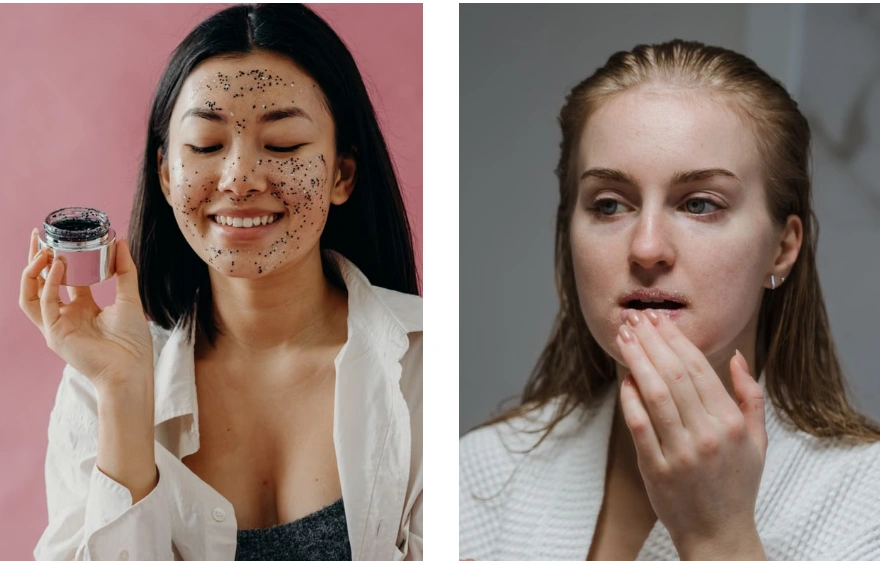
I used to think a low acid percentage automatically meant gentle.
That ignored frequency, formula, quantity and everything else in my routine. A mild exfoliant used too often can become more disruptive than a stronger product used carefully and infrequently.
The FDA explains that alpha hydroxy acids can increase sun sensitivity, particularly the possibility of sunburn. Its information on beta hydroxy acids also advises stopping and seeking medical advice when irritation or prolonged stinging occurs.
I had treated those warnings as packaging formalities.
Once my skin became reactive, I understood that gentle exfoliation describes the relationship between a product, its frequency and the user’s tolerance. It is not a permanent characteristic printed on the bottle.
This was where 1.Anchor helped me rethink product comparisons. The relevant question was not which exfoliant promised the smoothest skin. It was which one could fit into my existing treatment routine without repeatedly pushing my skin past its limit.
My Routine Became Uneven and Worked Better
I no longer exfoliate every fourth night.
Sometimes I exfoliate once in ten days. Sometimes I pause for several weeks. I judge the need by persistent congestion or roughness, not by the day displayed on my phone.
My recovery nights are not waiting rooms between stronger products. They are normal skincare nights consisting of gentle cleansing and moisturising. When my skin is uncomfortable, I extend them.
Sun protection also matters because exfoliating ingredients and retinoids can increase sensitivity or make irritation more consequential. The AAD recommends broad-spectrum, water-resistant sunscreen with SPF 30 or higher.
The new routine looks untidy on a calendar. Some months contain very little exfoliation.
My skin, however, is calmer.
Retinoids Complicated the Cycle
My retinoid already affected skin-cell turnover and could cause dryness. Adding a separate exfoliation night every four days was not automatically necessary.

The AAD recommends starting retinoids gradually and using moisturiser to help reduce irritation. Its retinoid and retinol guidance also cautions people with substantial redness, inflammation, allergies or dryness to seek appropriate advice.
For acne treatment, the same principle applies: active ingredients have to be considered together. The AAD’s acne-treatment information notes that dermatologists may adjust the amount, frequency or order of retinoid application when irritation develops.
My cycle had separated the products by night but not by cumulative effect.
A recovery night could not automatically erase irritation created by the previous two nights.
Why I Think Skin Cycling Is Losing Its Grip
Skin cycling was useful because it gave people an easy alternative to stacking every active ingredient on one night. Its weakness was the same simplicity.
Once the pattern became a trend, the schedule often received more attention than product strength, skin condition, diagnosis or individual tolerance.
I do not think people have stopped cycling completely. I think the conversation is shifting towards adaptable routines, lower frequencies and barrier awareness.
That shift reflects what I learned the difficult way. A skincare schedule should organise decisions, not replace them.
The best night to exfoliate is not always the night the diagram tells me to. Sometimes the most informed step is leaving my face alone.