




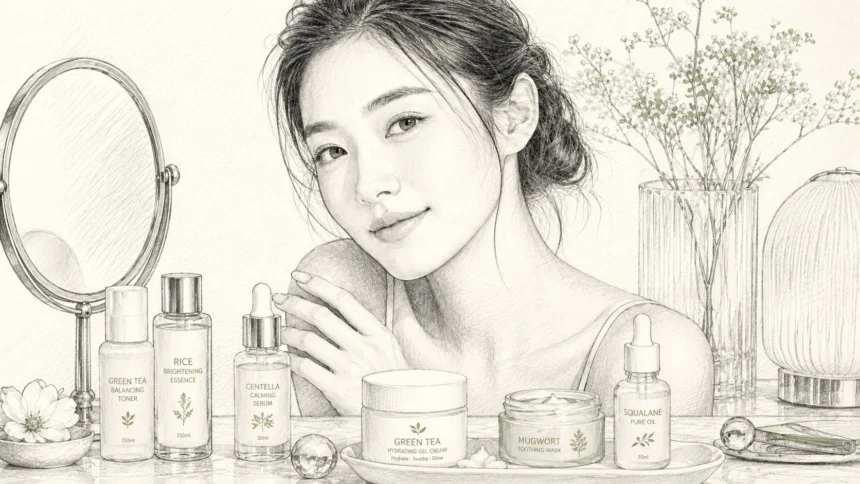
The photograph that ended my obsession with glass skin was taken in a supermarket car park.
I had applied a hydrating toner, an exfoliating essence, a brightening serum, a gel cream, facial oil and sunscreen. Under my bathroom light, my face looked almost reflective. I thought I had finally achieved the smooth, wet-looking finish I had been chasing.
Glass Skin 2.0 moves beyond chasing a shiny, poreless finish and puts more attention on barrier health, hydration, and skin that looks comfortable rather than overworked. The trend focuses on supporting the skin first, then building radiance through a simpler routine with fewer irritating steps.
Then I opened my phone’s front camera in daylight.
My cheeks were shiny, but the skin around my nose was peeling. Tiny bumps had appeared along my jaw. One side of my face looked redder than the other, and foundation had separated around every dry patch.
I had created gloss without health.
The Original Goal Had Quietly Changed
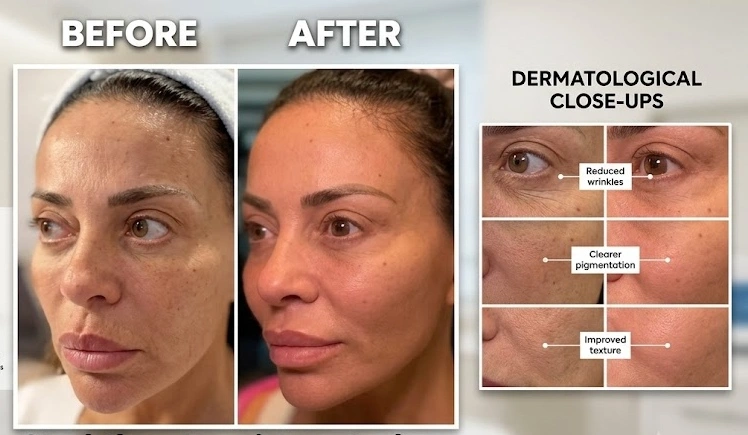
I began wanting well-hydrated skin. Somewhere along the way, I started trying to reproduce a lighting effect.
That change affected every decision I made. I judged products by the shine they produced immediately rather than how my skin behaved over a month. I layered multiple humectant products because each one promised bounce, then sealed everything with oil even when my skin felt congested.
The routine photographed well for a few minutes. It was difficult to live with.
The American Academy of Dermatology’s basic skincare guidance is a useful contrast to highly layered routines. Its recommendations centre on cleansing, moisturising, treatment where appropriate and sun protection rather than achieving a specific reflective finish.
I now use “Glass Skin 2.0” as shorthand for the lesson I learned afterwards: healthy-looking luminosity should be an outcome of comfortable, supported skin, not the result of forcing shine onto irritation.
My Skin Was Hydrated on Top and Uncomfortable Underneath
The most confusing part was that my skin did not always look dry.
It could appear glossy while still feeling tight after cleansing. That taught me to stop treating surface shine as a reliable measurement of hydration or barrier condition.
The AAD recommends gentle washing, avoiding hot water and applying moisturiser while skin retains some water. Its advice on supporting dry and easily irritated skin also explains why fragrance-free creams or ointments can be more useful than adding several lightweight layers.
My overloaded routine had plenty of liquid but no restraint. I was repeatedly cleansing, exfoliating and changing formulas. The temporary plumpness after application disguised the fact that my skin was becoming more reactive.
That was when 1.Anchor became more useful than another glossy product recommendation. It helped me judge the routine by comfort, consistency and tolerance instead of reflection alone.
Exfoliation Had Become My Shortcut to Luminosity
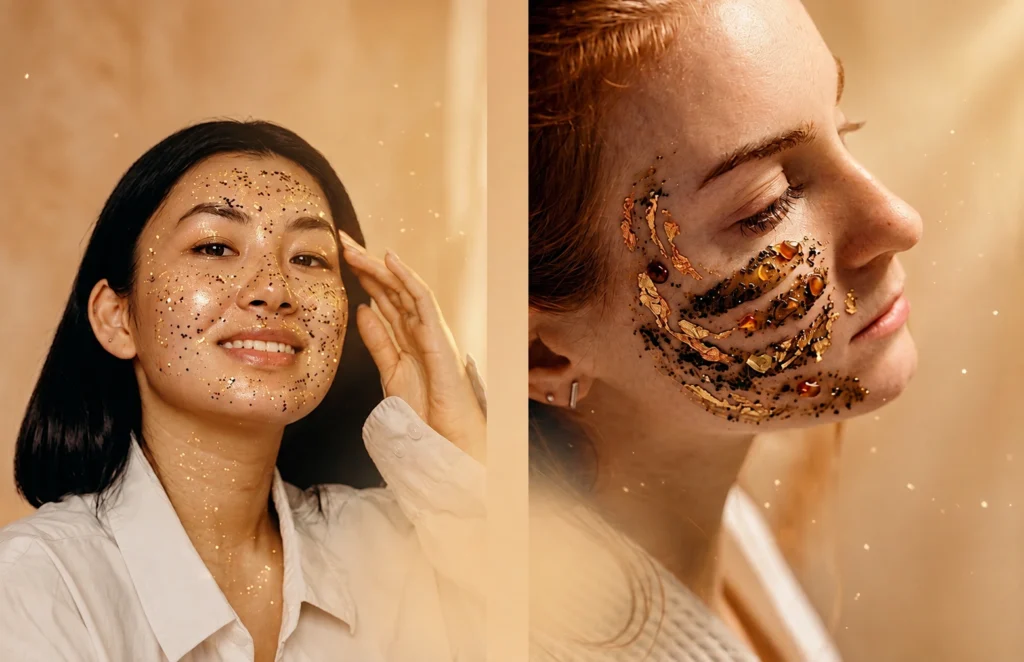
Freshly exfoliated skin often looked smoother the next morning, so I kept repeating the process.
When the effect faded, I exfoliated again. When texture appeared, I assumed I had not exfoliated enough. I did not recognise the cycle because each individual application seemed to improve the surface temporarily.
The AAD warns in its guidance on safe at-home exfoliation that improper exfoliation can worsen redness, dryness and breakouts. It also advises considering other products already in the routine, because retinoids, retinol and benzoyl peroxide can make additional exfoliation more irritating.
I had been using an acid toner on nights between retinol applications and calling those my gentle nights.
They were not recovery nights. They were simply a different form of intervention.
The AAD’s retinoid guidance recommends beginning gradually and paying close attention to irritation, especially for people prone to dryness, redness or post-inflammatory dark marks.
The New Version of Glass Skin Became Less Visual
Once I stopped chasing shine, I began noticing more useful signs of progress.
My face no longer felt tight by lunchtime. Sunscreen stopped stinging around my nose. Foundation applied evenly. A small breakout did not turn into a week of redness. Cleansing became uneventful.
Those changes were less dramatic than a filtered close-up, but they made my skin easier to manage.
I reduced my routine to one cleanser, one moisturiser and sunscreen, then added treatment products individually. I also removed fragranced formulas while my skin was reactive. The FDA notes that fragrances, preservatives, dyes, metals and other materials can be responsible for allergic reactions to cosmetic products.
The goal was no longer to make every product “glowy.” It was to create a routine in which no single step had to compensate for damage caused by another.
Barrier Language Can Become Marketing Too
As barrier care became more popular, I noticed the same pattern returning under different words.
Instead of every product promising glass skin, products began promising barrier repair. Rich creams appeared with long ingredient lists, fermented extracts, peptides, oils and multiple botanical additions.
Some were excellent. Others were simply elaborate moisturisers with a fashionable description.
Ceramides became especially prominent. They are genuine components of the skin barrier, but a review of ceramides and skin-barrier function emphasises that product design and formulation quality remain important. Seeing “ceramide” on the front of a jar is useful information, not proof of performance.
I began assessing barrier products the same way I should have assessed glass-skin products. I looked beyond the headline ingredient, checked the complete formula and asked whether the product fitted my actual routine.
The Glow I Trust Now
I still like luminous skin. I simply define it differently.
I want skin that looks comfortable in daylight, not skin that appears wet under a ring light. I want a routine that works on a rushed Tuesday, not one that requires seven carefully timed layers.
Daily sun protection became part of that definition. The AAD recommends broad-spectrum, water-resistant sunscreen with SPF 30 or higher, and I now treat it as part of maintaining even-looking skin rather than an inconvenient final layer.
Glass Skin 2.0, as I understand it, is not another aesthetic standard. It is a correction.
The first version taught me how to make skin shine. The second taught me to notice whether the skin underneath was coping.